• Home
  • /
  • Publications
  • /
  • WFP’s Work on South-South and triangular cooperation in 2018

WFP’s Work on South-South and triangular cooperation in 2018


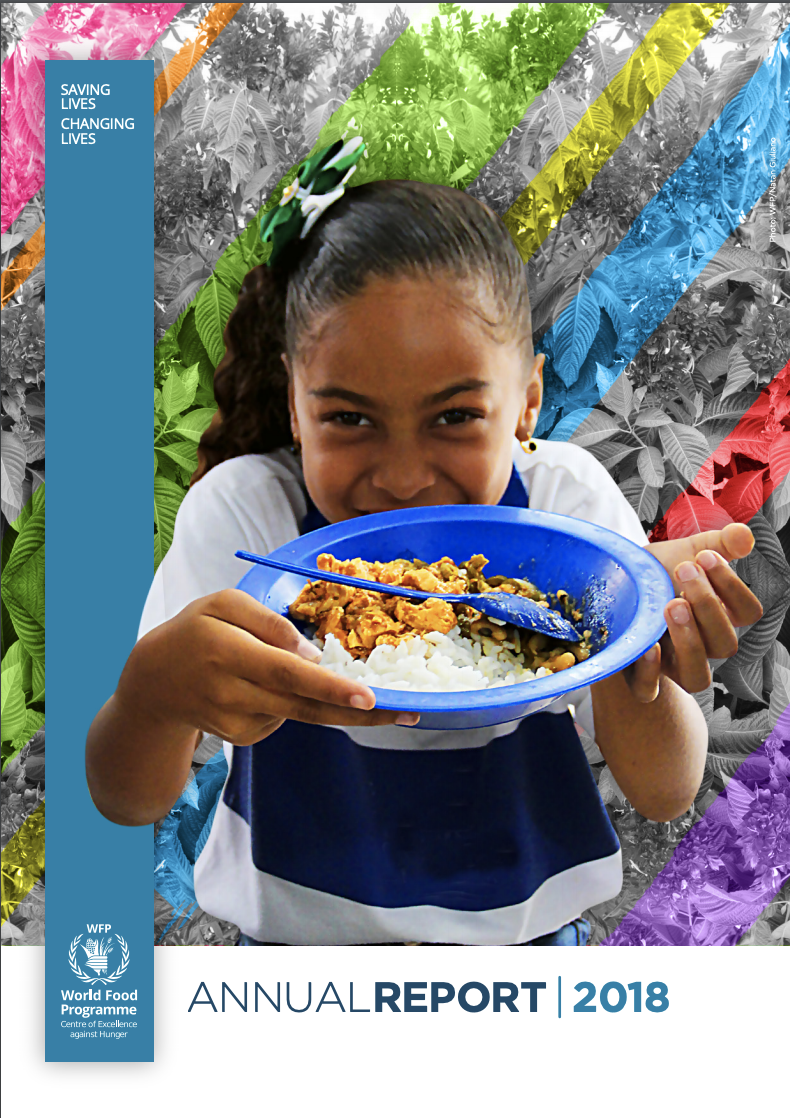
The WFP CoE continuously supports 30 countries in developing capacity to achieve Zero Hunger. Depending on the national contexts and demands, some countries require even closer technical assistance and remote support. In 2018, 17 countries (Benin, Burkina Faso, Burundi, Cambodia, Côte d’Ivoire, The Gambia, Guinea-Bissau, Lao, Liberia, Mozambique, Nepal, Kenya, Sao Tome and Principe, Senegal, Sierra Leone, Tanzania, and Togo) were directly supported by the WFP Centre to strengthen national capacities to promote sustainable development. Concrete outcomes from this capacity strengthening support enhanced national school feeding policies, programmes, and system components.

The WFP Centre has provided specific support to seven countries in taking ownership of their school feeding programmes through South-South and triangular cooperation initiatives. It also started to support four African countries in connecting smallholder farmers producing food along with cotton to institutional markets, including school feeding programmes.
                        Download PDF. 

Funding for all these activities come from various sources, including the countries that are cooperating with the WFP Centre of Excellence. Each country that engages in South-South cooperation needs to invest human and financial resources for the activities to succeed, and their motivation is to access knowledge, skills, and resources that would not be available to them otherwise. Brazil and all 30 countries involved in the WFP Centre of Excellence’s activities benefit from a network of experts, resources, technology, and opportunities that help to recognize and responding to the problems and requirements of each country towards sustainable development.

The WFP Centre organized, co-organized, or participated in 20 high-level events to strengthen advocacy for South-South cooperation, Zero Hunger and school feeding. This is part of the WFP Centre’s strategy to engage new partners and strengthen governments’ commitment to improving nutrition, expanding school feeding, and overcoming hunger. These events help positioning the WFP Centre of Excellence, the World Food Programme and Brazil as key players in the international cooperation arena. They are also an opportunity for partner countries to share their experiences and showcase their accomplishments.
Connect with UNOSSC

Stay updated with the latest trends in South-South cooperation and access our vast repository of knowledge.

Copyright © UNOSSC/UNDP

Alliance Application Form

Submit an Expression of Interest and/or Demand Signal. UNOSSC reviews submissions on a rolling basis.

1. Official name of organization / institution / government entity (exclusions to apply) *
Organization logo
Maximum file size: 20 MB
2. Country *
3. Region *
4. Select relevant SDGs *
5. Partner category *
6. Website *
7. Brief description of your institution (max. 150 words) *
Name for the Lead *
Title for the Lead *
Email address for the Lead *
Name for the co-lead
Title for the co-lead
Email address for the co-lead
Section 3. Expression of Interest in the Alliance *
Additional information on proposed areas of engagement may be requested through the platform following initial review by the Alliance Secretariat.
Section 4. Due Diligence and Integrity Declaration *

Submission Note:

  • Submission of this Expression of Interest form does not automatically confer participation in the Alliance.
  • All submissions will be reviewed by the Alliance Secretariat, including basic eligibility screening and proportionate due diligence, as appropriate.
  • Participation in Alliance activities is determined based on relevance to articulated cooperation needs, alignment with Alliance principles, and integrity considerations.
  • Engagement under the Alliance is voluntary, non-binding, and facilitative in nature, and does not constitute funding approval, contractual commitment, or institutional membership.
  • The Alliance Secretariat may contact submitting entities for additional information or clarification during the review process.

Submission of Demand Form

Description of Demand

Indicate the type of support or cooperation requested through the Alliance.
Please briefly describe the challenge, gap, or priority. (Max. 300 words)

Thematic and Geographic Focus

Please indicate the main focus areas of your demand:

A. Thematic Areas (select up to three)
B. Geographic Focus (select all that apply)

Proposed Engagement Modalities

Please indicate how you would like to engage through the Alliance (select all that apply):

Expected Outcomes

Please indicate the main results you seek to achieve through this engagement. (Max. 200 words)
Examples:
• Capacity strengthened
• Partnerships established
• Sectoral or regional strategies co-developed
• Solutions piloted
• Knowledge generated
• Policies informed

Timeline and Readiness (if applicable)

1. Expected timeframe for engagement:
2. Current stage:

Additional Information

Please provide any additional information, documents, or links relevant to this submission.
(Max. 200 words or upload link)

Submission of Offer Form

Description of Contribution

Indicate the type of contribution your institution can provide and describe the expertise, resources, or solutions you may offer.
Please briefly describe your proposed contribution. (Max. 300 words)

Thematic and Geographic Focus

Please indicate the main focus areas of your interest:

A. Thematic Areas (select up to three)
B. Geographic Focus (select all that apply)

Proposed Engagement Modalities

Please indicate how you would like to engage through the Alliance (select all that apply):

Expected Outcomes

Please indicate the main results you aim to achieve through this engagement. (Max. 200 words)
Examples:
• Capacity strengthened
• Partnerships established
• Sectoral or regional strategies co-developed
• Solutions piloted
• Knowledge generated
• Policies informed

Timeline and Readiness (if applicable)

1. Expected timeframe for engagement:
2. Current stage:

Additional Information

Please provide any additional information, documents, or links relevant to this submission.
(Max. 200 words or upload link)

Organization Registration

Authentication & Due Diligence This prototype simulates identity verification, due diligence confirmation, and an authentication step before submission. *

First Name *
Last Name *
Email address *
Password *
Confirm Password *
Name of institution / organization *
Country / Region *
Organization Type *
Organization other *
Function / role *
Organization logo *
Maximum file size: 1 GB

Login

Login / email *
Password *
Remember me

Forgot password?

Connect form

Your name *
Email *
Organization / institution *
Job title / role *
Reason for connecting:
Short message

Create Meeting Room

Purpose:
Use this form to create a virtual meeting room to consult with experts and partners on specific thematic areas. A coordinator will confirm expert availability and meeting details.

Mandatory Information

Meeting purpose / consultation topic *
Type of meeting *
Main thematic area *
SDG (select multiple)
Expert(s) requested from roster
Brief description of discussion *

Preferred meeting date(s) (up to 3)

Date 1
Date 2
Date 3
Preferred time window *
Time zone *
Requesting institution / organization *

Contact person

Name *
Email *

Optional Information

Related Galaxy item
Urgency level *
Preferred language(s)
Other participants to invite
Additional notes

Knowledge Products form

A. Publication Basics (Mandatory)

Exact Title of the Publication *
Executive Summary *
Submitting Organization *
Publication Available Online *
Direct Link to Publication (if online)

B. Publication Details

Subtitle
Publication Type
Year of Publication
Authors / Editors
Key Messages

C. Organizations & Contacts

Partner Organizations

Contact Person

Name
Title
Email

D. Discoverability (Optional)

Topics / Themes
Keywords
SDGs
Geographic Coverage
Language(s)

Good Practices form

SECTION 1. BASIC INFORMATION

Title of the Good Practice *
Name of the Solution(s) *
Short Summary *
max. 60 words
Lead Implementing Institution *
Partner Institutions *
Countries / Territories Involved *
Regions Involved *
Type of Cooperation *

SECTION 2. DEVELOPMENT CONTEXT & SDG ALIGNMENT

Primary SDG(s) Addressed *
SDG Target(s) *
Secondary SDGs (if applicable)
Development Challenge Addressed *
100–150 words

SECTION 3. DESCRIPTION OF THE GOOD PRACTICE & SOLUTION

Objectives of the Good Practice *
max. 100 words
Description of the Solution(s) *
max. 300 words
Innovation Dimension *
max. 150 words

SECTION 4. SOUTH-SOUTH & TRIANGULAR COOPERATION VALUE

South-South Knowledge Exchange *
max. 200 words
Role of Triangular Partners (if applicable)

SECTION 5. PARTICIPATION & GOVERNANCE

Participatory Approach *
max. 150 words
Governance & Institutional Arrangements *

SECTION 6. PRODUCED IMPACT (Partner-Validated)

Description of Produced Impact *
max. 250 words
Quantitative Results *
Qualitative Results
Timeframe of Impact *

SECTION 7. SUSTAINABILITY & SCALABILITY

Sustainability of the Good Practice *
max. 150 words
Replicability & Adaptability of the Solution *
max. 150 words

SECTION 8. RISKS & LESSONS LEARNED

Key Risks and Mitigation Measures
max. 100 words
Lessons Learned *
max. 150 words

SECTION 9. RESOURCES & EVIDENCE

Supporting Materials
Maximum file size: 1 GB
manuals, toolkits, evaluations, media
URL of the Good Practice / Solution

SECTION 10. CONTACT INFORMATION & VALIDATION

Focal Point – Lead Institution

Name *
Title *
Organization *
Email *
Focal Point – Partner Institution (Impact Validation)* (name, title, organization, email) *
Declaration *

Scroll to Top