Kabul University Fruit Research and Application Garden Project

Agriculture Cooperation on education and research for introducing high value Agri-products

sgdb@tika.gov.tr

Challenges

Agriculture is the source of livelihood for 80% of Afghanistan. 4/5 of the Afghan population live in rural areas and most are farmers or farmer laborers. It has a farming population of 12.1 million meanwhile non-farming population is only 2.5 million. Farm sizes are usually very small. Farms cover nearly 3 million hectares of irrigated land and about 3.5 million Ha of cultivable rainfed land. The arable portion of the total land area of 6.5 million hectares shows in itself the paucity of agricultural resources in Afghanistan: arable land is a mere 10% of the country’s territory (comprising 653,000 square kilometers). Afghanistan has about 0.3 hectares of arable land per capita, which is very low by international standards. When the scant precipitation and difficult climate conditions in many parts of the country are also taken into account, these figures make clear the hardship and resource poverty endured by Afghan farmers trying to make a living out of their country’s land. In total, three quarters of all farmers, with total holdings below 5 hectares, control only 13% of the land (19% of the irrigated, and 8.7% of the rain-fed).

Toward a Solution

Fruits are the main crops grown in Afghanistan. Fortunately, the country’s lands can grow important and valuable fruits. According to a report published by the Ministry of Agriculture, Irrigation and Livestock of Afghanistan 2019/2020, about 23 types of fruits are available including grapes, almonds, pomegranates, apples, peaches, cherries, apricots, plums, figs, pistachios, berries, malt, orange, lemon, kiwi and nuts in different provinces of the country in the form of orchards. Although the country has great potential in terms of fruit cultivation, the production amount of high-value crops like cherries, peaches and plums do not meet the country’s demand. Therefore, the merchants are importing such products from abroad in order to satisfy the unmet demand for these fruits.

Therefore, it is important to improve the situation of agriculture, increase yields and mechanize agriculture. Afghanistan is a mountainous country with wide plains. Due to its geographical location and topography, it has different ecosystems that make this country spectacular from an agricultural point of view.

Promoting and introducing crops with superior economic value, strengthening traditional crops, introducing and disseminating land-based agricultural technologies, improving and modernizing cultivation methods, increasing yields, improving horticulture, educating farmers and gardeners are essential for the development of Afghanistan and its people. Agricultural education can have an important effect on the sustainable development of the agriculture sector and unlocking its potential.

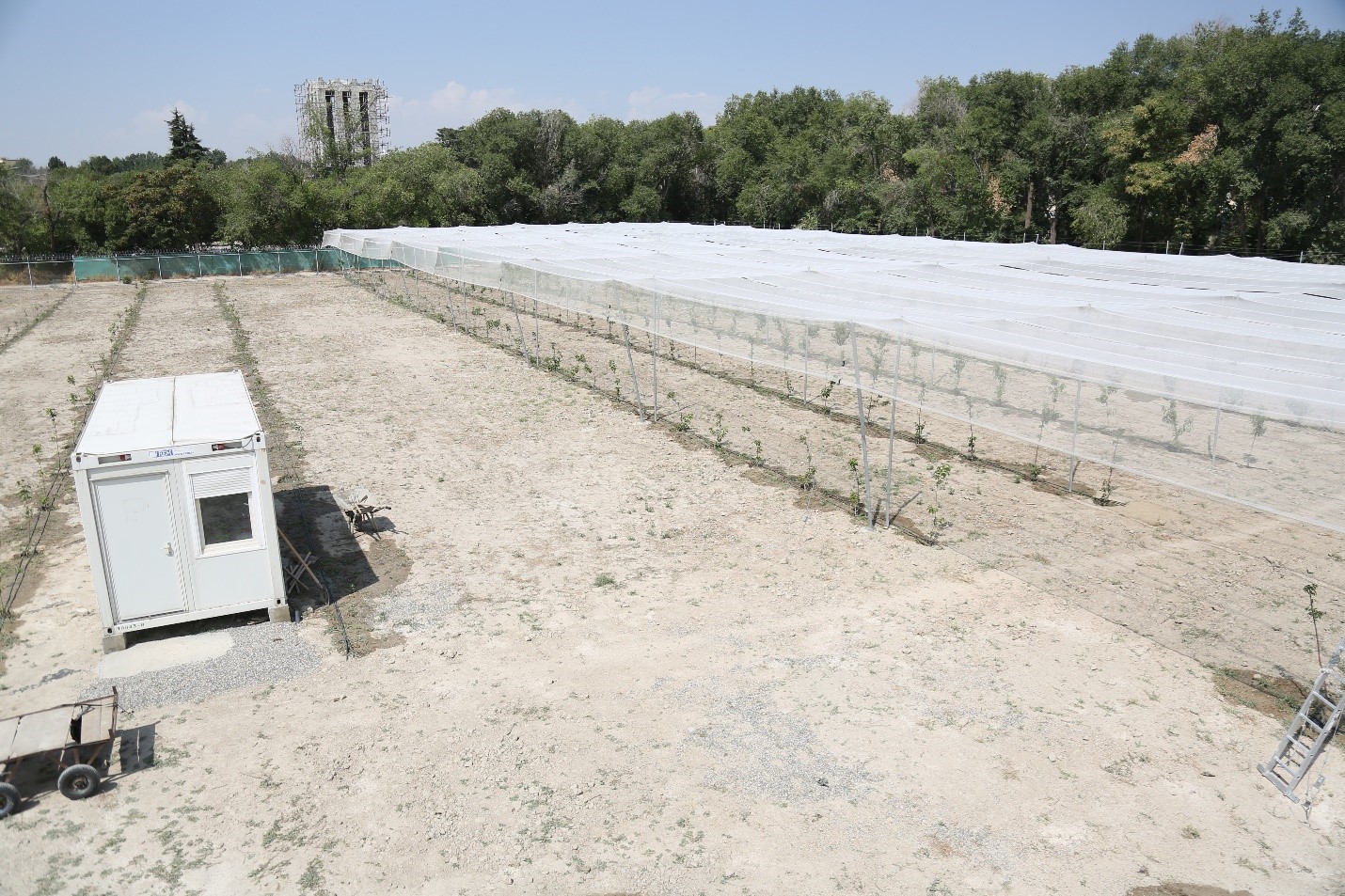
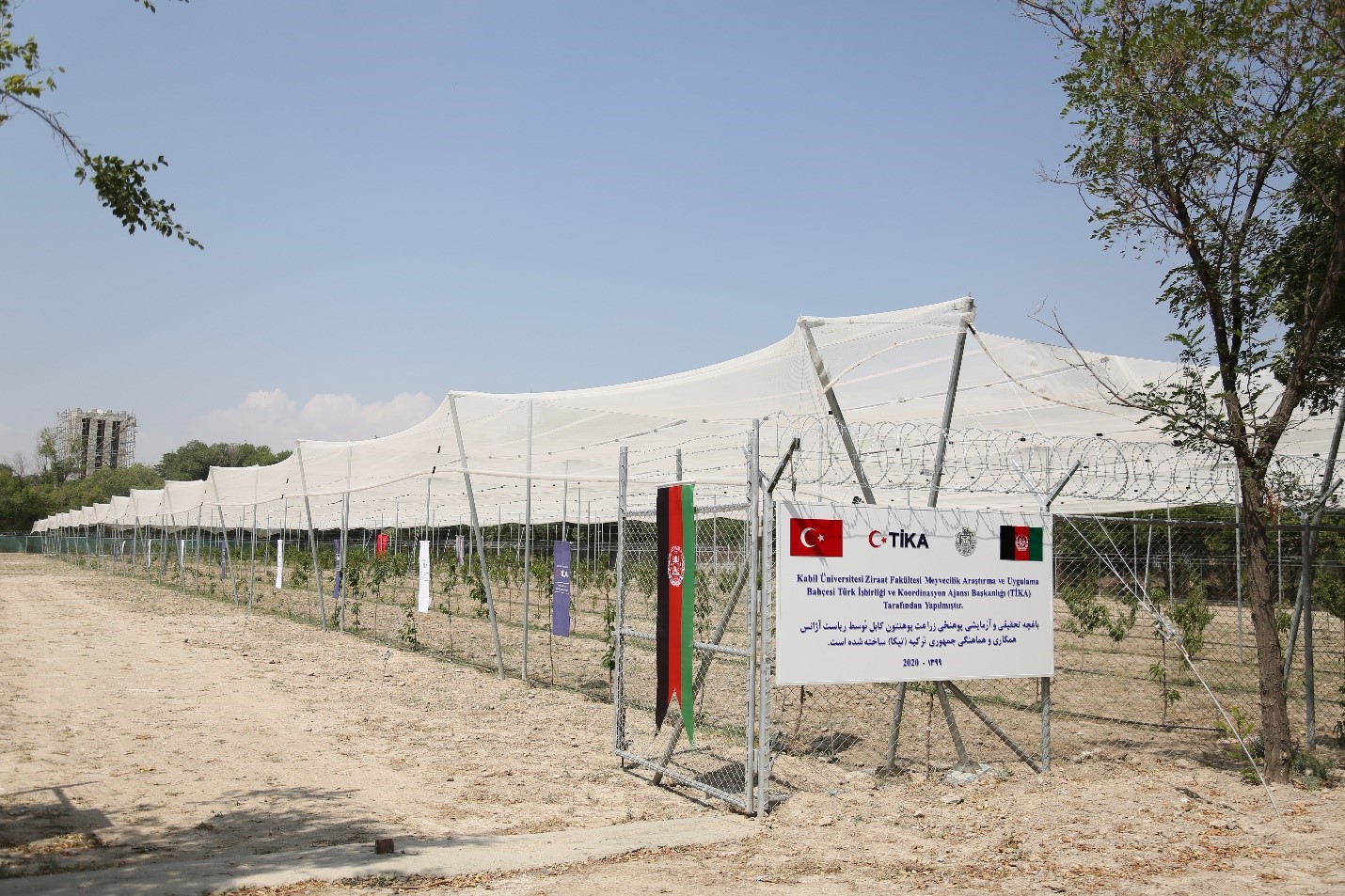
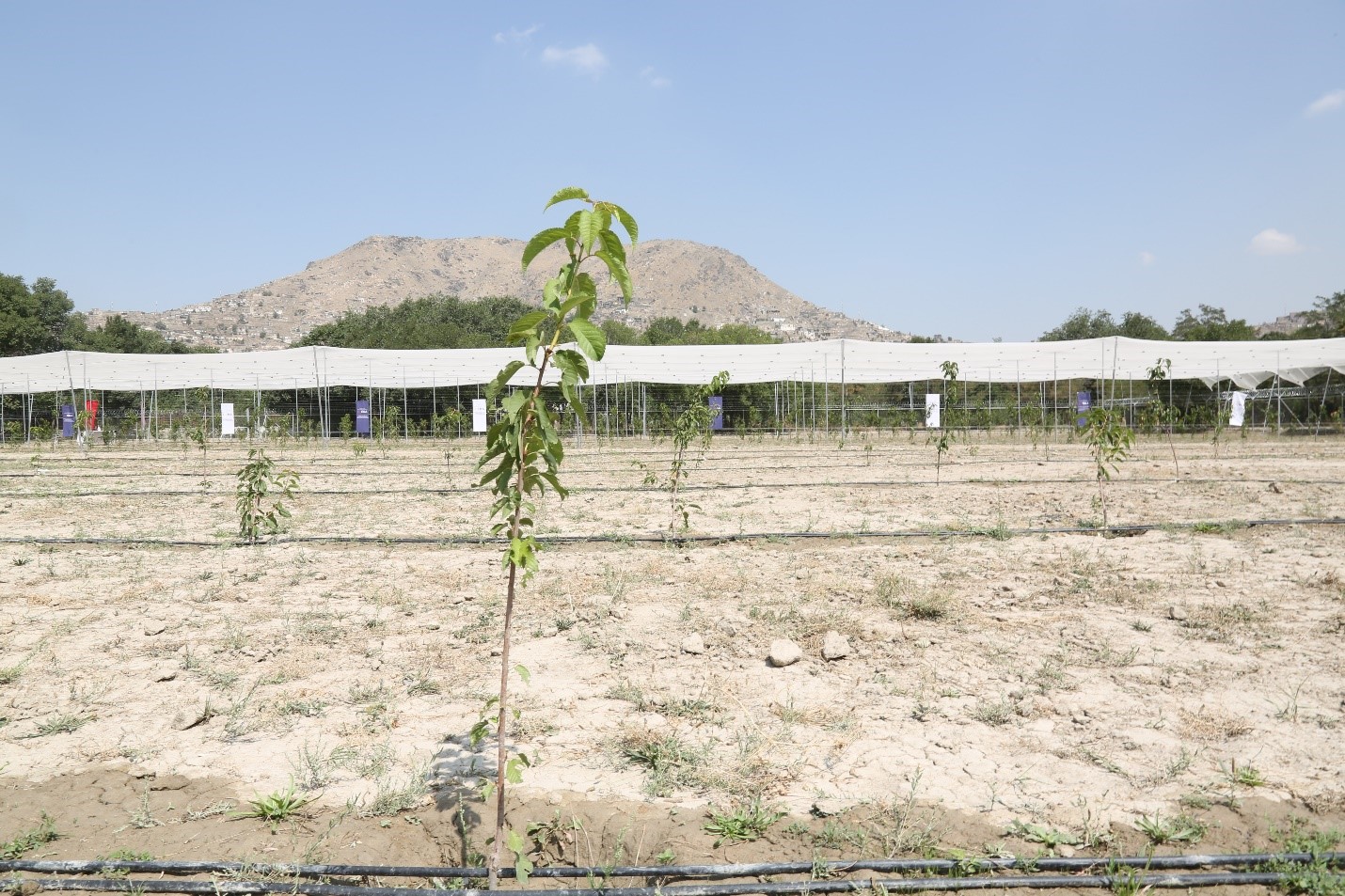
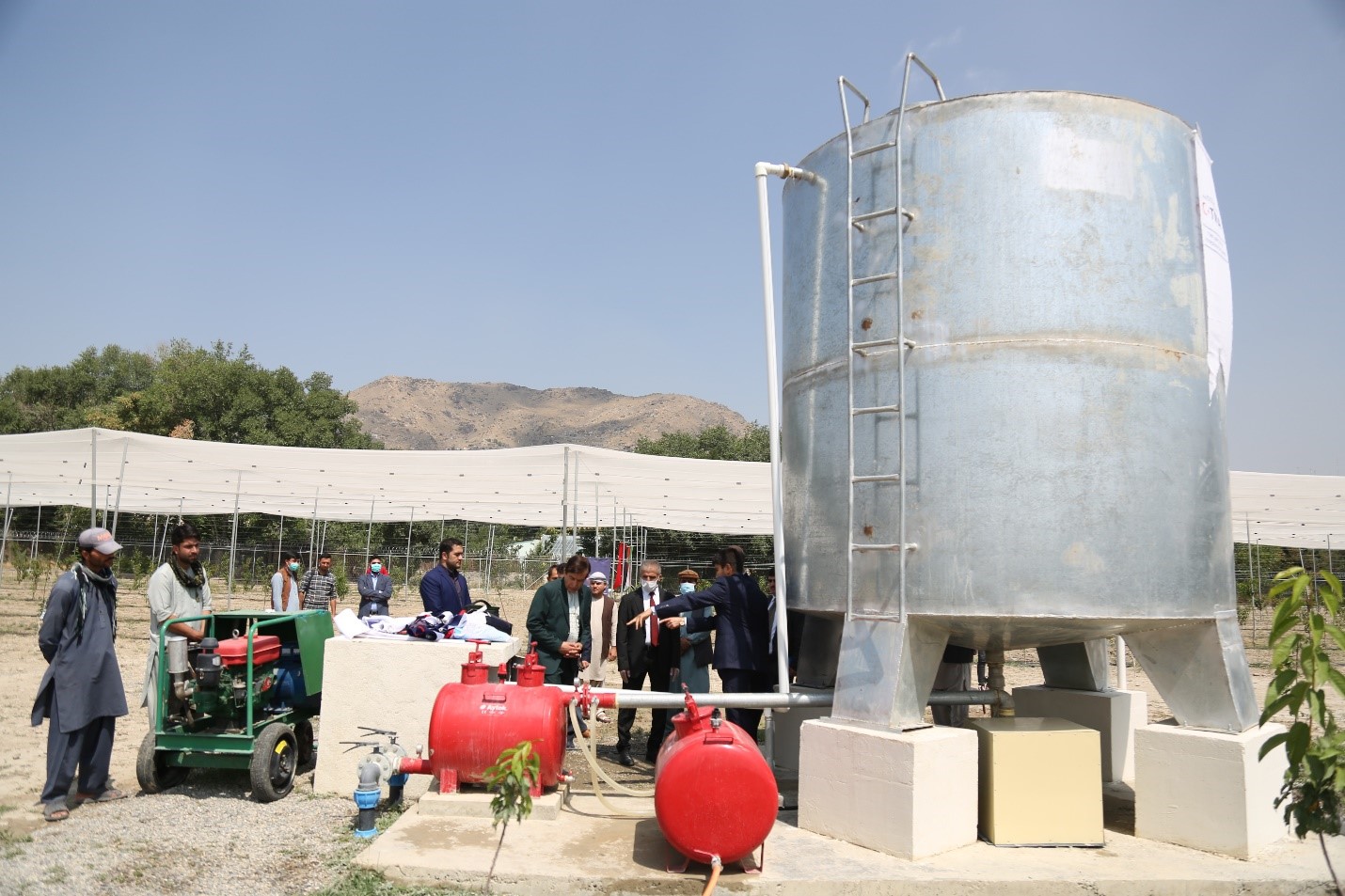
The T?KA Program Cooperation Office in Kabul provided technical and financial support, for the purpose of agricultural cooperation, established the research and experimental gardens and training programs at Kabul University. The Kabul University Agriculture Faculty Fruits Research and Application Garden Project aimed to introduce high-value crops such as cherry, peach and plums to Afghanistan’s agricultural market. One other main objective of the project is to provide infrastructure for the Agriculture Faculty of Kabul University so that the teachers and students of faculty can do researches to find out the best type of fruits mentioned above according to the climate and soil type of Afghanistan’s provinces. After feasibility studies that are going to be carried out by academic personnel, the products and improved saplings are going to be distributed throughout Afghanistan to ensure project’s sustainability while securing a good source of livelihood for farmers and households.

With Kabul University Agriculture Faculty Fruit Research and Application Project, different types of valuable products are being introduced in order to support the economies of farmers and households in Afghanistan (SDG 1).

Afghanistan has about 0.3 hectares of arable land per capita, which is low by international standards. The project’s main goal is to use the arable lands feasibly to yield more products with a high economical value for households. The project also aims to contribute to the researches on improved nutrition, sustainable agriculture and production (SDG 2, 12).

Aside from the relevant goals mentioned above, the research and application garden created in Kabul University enables university teachers and students to conduct researches on different types of cherries, peaches and plums to specify the best yields of crops according to Afghanistan’s climate and agricultural lands in different provinces (SDG 4 and SDG 8).

In the established research-educational garden, about 1500 fruitful seedlings were planted for practical and research courses of the Faculty of Agriculture. This will enable strengthening of education and research in Afghanistan and will be continued to be used optimally and the generation of these orchards, which include several species of cherry, plum and peach trees, that will be planted throughout Afghanistan.

In addition, after the research on different types of cherries, peaches and plums, the results will be shared with farmers all around Afghanistan in order to sustain the projects’ effect and make the product widely available.
Primary SDG
CONTACT INFORMATION
Strategy Development Department / TIKA
COUNTRIES INVOLVED
Afghanistan
SUPPORTED BY
Turkish Cooperation and Coordination Agency (T?KA)

Similar Solutions


  • All Post
  • ATCT Featured Publications POM
  • BAPA+40
  • Blog
  • Capacity Development Initiatives
  • CICETE Featured Publications POM
  • CIKD
  • Cities Clusters - Agriculture
  • Cities Clusters - COVID-19
  • Cities Clusters - COVID-19 Knowledge Products
  • Cities Clusters - DRR
  • Cities Clusters - E-commerce
  • Cities Clusters - Tourism
  • Cities Clusters - Tourism Knowledge Products
  • Cities Clusters - Transport
  • Cities Clusters - Waste
  • Cities Project
  • Cities Project COVID-19 Newsletters
  • Cities Project COVID-19 Response
  • Cities Project Knowledge Products
  • Classic (untouched)
  • Climate Action
  • COMSATS Featured Publications POM
  • COMSATS Featured Solutions POM
  • Converted from Divi
  • Converted from Mixed
  • Converted from WPBakery
  • COVID-19
  • COVID-19 Page Featured Solutions
  • DRR Knowledge Products
  • DRR News
  • Empty Post
  • Events
  • Featured Event UN-Habitat POM
  • Financing for Development
  • Financing Mechanisms
  • g7+
  • Gender Events
  • Gender News
  • Good Practices in SSTrC Series
  • Good Practices Publications
  • Good Practices Thematic Series & Special Editions
  • Good Practices Vol. 2
  • Good Practices Vol. 3
  • GSSDC
  • Highlighted
  • Highlighted Publications
  • IAEA Featured Solutions POM
  • IBRAF Featured Publications POM
  • IBSA Fund
  • IBSA Fund Annual Reports
  • IBSA Fund News and Stories
  • IBSA Fund Publication
  • IBSA Fund Story
  • ICGEB Featured Events POM
  • ICGEB Featured Publications POM
  • ICGEB Featured Solutions POM
  • ILO Featured Events POM
  • ILO Featured Publications POM
  • ILO Featured Solutions POM
  • India-UN Development Partnership Fund
  • India-UN Fund Publication
  • India-UN Fund Story
  • IsDB
  • IsDB Featured Publications POM
  • IsDB SCC
  • News
  • Norec Featured Publications POM
  • Norec Featured Solutions POM
  • Peace and Development
  • PGTF Publications
  • PGTF Story
  • PICA Featured News POM
  • PICA Featured Publications POM
  • PICA Featured Solutions POM
  • PIDF Featured Publications POM
  • Publications
  • Regional Updates
  • Research
  • ROK-UNOSSC Facility
  • SGP Featured Publication POM
  • SGP Featured Solutions POM
  • Solution
  • South South in Action
  • South-South Global Thinkers
  • South-South Ideas
  • South-South Ideas Series
  • South-South in Action Series
  • Southern Response to COVID-19
  • SSN4PSI Featured Publications POM
  • SSN4PSI Featured Solutions POM
  • Training
  • UN Day for SSC 2020
  • UN Fund for SSC
  • UN SSC Day Publications
  • UN-Habitat Featured Publications POM
  • UN-HABITAT Featured Solutions POM
  • UNCCT
  • UNEP Featured Publications POM
  • UNFPA
  • UNFSSC Publication
  • UNFSSC Story
  • UNIDO Featured Publications POM
  • UNIDO Featured Solutions POM
  • UNIDO POM Events
  • UNOCT Featured Publications POM
  • UNV
  • UNV Featured Publications POM
  • WB Featured Publications POM
  • WB Featured Solutions POM
  • Webinars
  • WFP Featured Events POM
  • WFP Featured Publication POM
  • WFP Featured Solutions POM
  • WIPO
  • Workshops and Seminars
  • Youth4South
  • z Across the Globe 1
  • z Across the Globe 2
  • z Across the Globe 4
  • z Across the Globe 5
  • z Across the Globe 6
  • z Across the Globe 7
  • z Across the Globe 8
  • z ES BAPA+40
  • z ES Eventos
  • z ES Noticias
  • z ES Noticias Destacadas
  • z ES Publicaciones
  • z ES Publicaciones Destacadas
  • z ES Serie Buenas Prácticas en la CSSyT
  • z ES Serie El Sur-Sur en Acción
  • z FR Actualités
  • z FR BAPA+40
  • z FR Événements
  • z FR Publications
  • z FR Publications en vedette
  • z FR Série Bonnes pratiques en CSST
  • z FR Série Sud-Sud en action
  • z Highlighted News
  • z Photos
  • z Videos
  • z ZH BAPA+40
  • z ZH Events
  • z ZH News

Connect with UNOSSC

Stay updated with the latest trends in South-South cooperation and access our vast repository of knowledge.

Copyright © UNOSSC/UNDP

Alliance Application Form

Submit an Expression of Interest and/or Demand Signal. UNOSSC reviews submissions on a rolling basis.

1. Official name of organization / institution / government entity (exclusions to apply) *
Organization logo
Maximum file size: 20 MB
2. Country *
3. Region *
4. Select relevant SDGs *
5. Partner category *
6. Website *
7. Brief description of your institution (max. 150 words) *
Name for the Lead *
Title for the Lead *
Email address for the Lead *
Name for the co-lead
Title for the co-lead
Email address for the co-lead
Section 3. Expression of Interest in the Alliance *
Additional information on proposed areas of engagement may be requested through the platform following initial review by the Alliance Secretariat.
Section 4. Due Diligence and Integrity Declaration *

Submission Note:

  • Submission of this Expression of Interest form does not automatically confer participation in the Alliance.
  • All submissions will be reviewed by the Alliance Secretariat, including basic eligibility screening and proportionate due diligence, as appropriate.
  • Participation in Alliance activities is determined based on relevance to articulated cooperation needs, alignment with Alliance principles, and integrity considerations.
  • Engagement under the Alliance is voluntary, non-binding, and facilitative in nature, and does not constitute funding approval, contractual commitment, or institutional membership.
  • The Alliance Secretariat may contact submitting entities for additional information or clarification during the review process.

Submission of Demand Form

Description of Demand

Indicate the type of support or cooperation requested through the Alliance.
Please briefly describe the challenge, gap, or priority. (Max. 300 words)

Thematic and Geographic Focus

Please indicate the main focus areas of your demand:

A. Thematic Areas (select up to three)
B. Geographic Focus (select all that apply)

Proposed Engagement Modalities

Please indicate how you would like to engage through the Alliance (select all that apply):

Expected Outcomes

Please indicate the main results you seek to achieve through this engagement. (Max. 200 words)
Examples:
• Capacity strengthened
• Partnerships established
• Sectoral or regional strategies co-developed
• Solutions piloted
• Knowledge generated
• Policies informed

Timeline and Readiness (if applicable)

1. Expected timeframe for engagement:
2. Current stage:

Additional Information

Please provide any additional information, documents, or links relevant to this submission.
(Max. 200 words or upload link)

Submission of Offer Form

Description of Contribution

Indicate the type of contribution your institution can provide and describe the expertise, resources, or solutions you may offer.
Please briefly describe your proposed contribution. (Max. 300 words)

Thematic and Geographic Focus

Please indicate the main focus areas of your interest:

A. Thematic Areas (select up to three)
B. Geographic Focus (select all that apply)

Proposed Engagement Modalities

Please indicate how you would like to engage through the Alliance (select all that apply):

Expected Outcomes

Please indicate the main results you aim to achieve through this engagement. (Max. 200 words)
Examples:
• Capacity strengthened
• Partnerships established
• Sectoral or regional strategies co-developed
• Solutions piloted
• Knowledge generated
• Policies informed

Timeline and Readiness (if applicable)

1. Expected timeframe for engagement:
2. Current stage:

Additional Information

Please provide any additional information, documents, or links relevant to this submission.
(Max. 200 words or upload link)

Organization Registration

Authentication & Due Diligence This prototype simulates identity verification, due diligence confirmation, and an authentication step before submission. *

First Name *
Last Name *
Email address *
Password *
Confirm Password *
Name of institution / organization *
Country / Region *
Organization Type *
Organization other *
Function / role *
Organization logo *
Maximum file size: 1 GB

Login

Login / email *
Password *
Remember me

Forgot password?

Connect form

Your name *
Email *
Organization / institution *
Job title / role *
Reason for connecting:
Short message

Create Meeting Room

Purpose:
Use this form to create a virtual meeting room to consult with experts and partners on specific thematic areas. A coordinator will confirm expert availability and meeting details.

Mandatory Information

Meeting purpose / consultation topic *
Type of meeting *
Main thematic area *
SDG (select multiple)
Expert(s) requested from roster
Brief description of discussion *

Preferred meeting date(s) (up to 3)

Date 1
Date 2
Date 3
Preferred time window *
Time zone *
Requesting institution / organization *

Contact person

Name *
Email *

Optional Information

Related Galaxy item
Urgency level *
Preferred language(s)
Other participants to invite
Additional notes
Scroll to Top