7 Pacific Island nations band together to protect against extreme weather


Water tanks installed in Vonunu school, Photo: ©UNDP

7 Pacific Island nations band together to protect against extreme weather

Cyclones are a normal part of life for those living in the islands of the South Pacific. While the official season runs 1 November through 30 April, a tropical cyclone can form, literally, year-round. And cyclones are not the region’s only extreme weather events; there are regular occurrences of tropical storms, drought, floods, and heat waves.

The toll of these events can be staggering. In the 30-year period of 1983-2012, the total cost of these disasters was estimated to be $3.9 billion, the kind of money that stymies economic development and growth, especially for small island development nations (SIDS). Given the remoteness of the region itself, and the geographic sprawl of the countries within it, no one nation can effectively protect itself from the vagaries of mother nature and an escalating climate crisis.
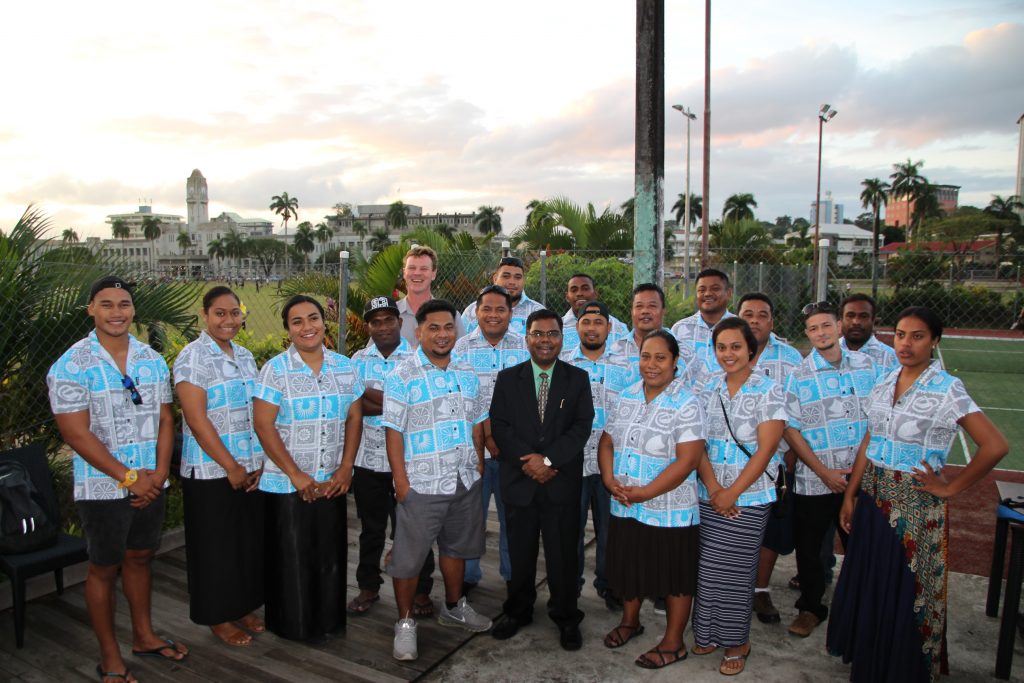
Project hydrologists attending training in India, Photo: ©UNDP

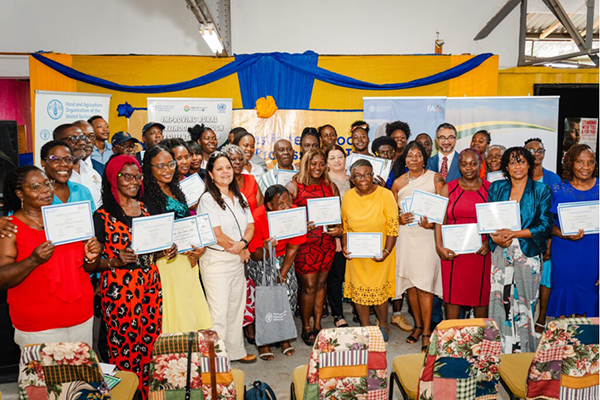
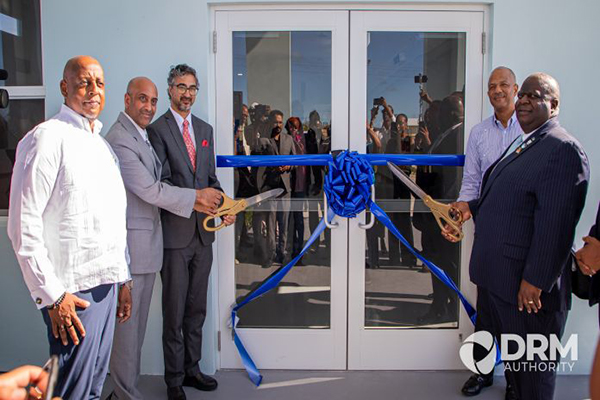
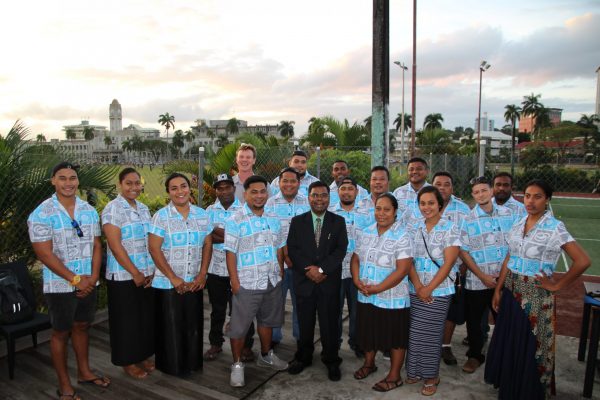
In 2017, the Meteorological departments of seven Pacific Island countries (Cook Islands, Kiribati, Marshall Islands, Federated States of Micronesia, Nauru, Solomon Islands and Tonga) partnered with UNDP to build an early warning system, one that would enhance each countries’ adaptive capacities for disaster preparedness, response, and recovery. Funded by the India-UN Development Partnership Fund, the project took a two-pronged approach: to build the professional expertise of each countries’ meteorologists and hydrologists, while at the same time to strengthen the technical capacity of the services themselves.

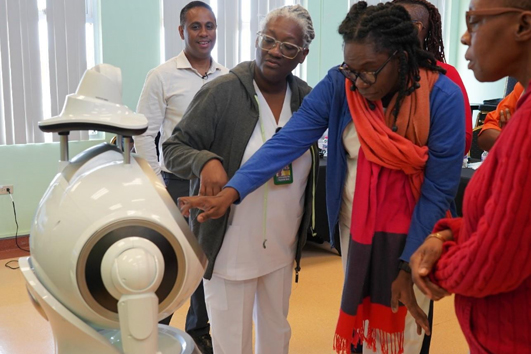
Improved equipment is essential to the project’s success. Rain gauges are being installed in both agricultural research stations and secondary schools to gather essential data for both the national offices but also to keep communities apprised of events. Installing them in schools is also a subtle effort to create interest in STEM careers among the students.

Meteorological automatic weather stations (AWS) that measure wind speeds and directions, temperature, moisture in the air and soil at various depths, and able to work autonomously using solar power, will be installed in strategic locations in the countries. As will hydrological AWS’ which will be able to measure water levels and volume to support early warnings for flood, drought and potentially hydropower in dams.
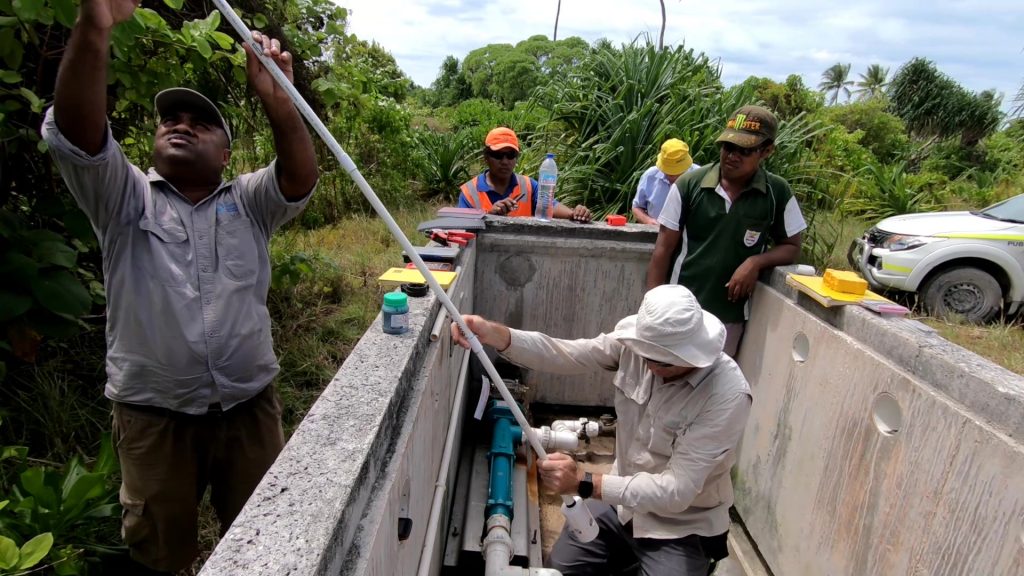
Installing the salinity system in Bonriki, Palau. Photo: ©UNDP

In the end, however, and as with all India-UN Fund supported projects, the project was underpinned by the hallmarks of South-South cooperation, emphasizing both mutual responsibility and solidarity amongst the partners and leveraging their individual and collective knowledge to strengthen each other and the partnership as a whole. On a local level, stakeholder meetings ensured a whole-of-society approach, and that community knowledge was integrated into decision-making throughout the project.

At the global level, the project leveraged the valuable resources and unique experiences shared by both the island nations as well as by India, which itself deals with a plethora of extreme weather challenges. Meteorologists and hydrologists attended professional development trainings at India’s World Meteorological Organization-accredited training institutions. And in 2018, 17 Pacific Island hydrologists went to India for training in the latest hydrology techniques for addressing water shortage and contamination issues.  

More recently, there are indications that both Kiribati and Tuvalu may be entering a drought phase, if they haven’t already. The system installed in Kiribati is already helping the Government navigate the potential challenge by providing near real time data, enabling the drought managers to make recommendations based on agreed threshold triggers making the system very valuable management tool.


Produced and edited by UNOSSC/UNDP and UNDP.


For more information please contact Ms. Ines Tofalo, Trust Fund and Project Management Specialist at UNOSSC: ines.tofalo@unoscc.org

More India-UN Fund Stories


Related Post


  • All Post
  • ATCT Featured Publications POM
  • BAPA+40
  • Blog
  • Capacity Development Initiatives
  • CICETE Featured Publications POM
  • CIKD
  • Cities Clusters - Agriculture
  • Cities Clusters - COVID-19
  • Cities Clusters - COVID-19 Knowledge Products
  • Cities Clusters - DRR
  • Cities Clusters - E-commerce
  • Cities Clusters - Tourism
  • Cities Clusters - Tourism Knowledge Products
  • Cities Clusters - Transport
  • Cities Clusters - Waste
  • Cities Project
  • Cities Project COVID-19 Newsletters
  • Cities Project COVID-19 Response
  • Cities Project Knowledge Products
  • Classic (untouched)
  • Climate Action
  • COMSATS Featured Publications POM
  • COMSATS Featured Solutions POM
  • Converted from Divi
  • Converted from Mixed
  • Converted from WPBakery
  • COVID-19
  • COVID-19 Page Featured Solutions
  • DRR Knowledge Products
  • DRR News
  • Empty Post
  • Events
  • Featured Event UN-Habitat POM
  • Financing for Development
  • Financing Mechanisms
  • g7+
  • Gender Events
  • Gender News
  • Good Practices in SSTrC Series
  • Good Practices Publications
  • Good Practices Thematic Series & Special Editions
  • Good Practices Vol. 2
  • Good Practices Vol. 3
  • GSSDC
  • Highlighted
  • Highlighted Publications
  • IAEA Featured Solutions POM
  • IBRAF Featured Publications POM
  • IBSA Fund
  • IBSA Fund Annual Reports
  • IBSA Fund News and Stories
  • IBSA Fund Publication
  • IBSA Fund Story
  • ICGEB Featured Events POM
  • ICGEB Featured Publications POM
  • ICGEB Featured Solutions POM
  • ILO Featured Events POM
  • ILO Featured Publications POM
  • ILO Featured Solutions POM
  • India-UN Development Partnership Fund
  • India-UN Fund Publication
  • India-UN Fund Story
  • IsDB
  • IsDB Featured Publications POM
  • IsDB SCC
  • News
  • Norec Featured Publications POM
  • Norec Featured Solutions POM
  • Peace and Development
  • PGTF Publications
  • PGTF Story
  • PICA Featured News POM
  • PICA Featured Publications POM
  • PICA Featured Solutions POM
  • PIDF Featured Publications POM
  • Publications
  • Regional Updates
  • Research
  • ROK-UNOSSC Facility
  • SGP Featured Publication POM
  • SGP Featured Solutions POM
  • Solution
  • South South in Action
  • South-South Global Thinkers
  • South-South Ideas
  • South-South Ideas Series
  • South-South in Action Series
  • Southern Response to COVID-19
  • SSN4PSI Featured Publications POM
  • SSN4PSI Featured Solutions POM
  • Training
  • UN Day for SSC 2020
  • UN Fund for SSC
  • UN SSC Day Publications
  • UN-Habitat Featured Publications POM
  • UN-HABITAT Featured Solutions POM
  • UNCCT
  • UNEP Featured Publications POM
  • UNFPA
  • UNFSSC Publication
  • UNFSSC Story
  • UNIDO Featured Publications POM
  • UNIDO Featured Solutions POM
  • UNIDO POM Events
  • UNOCT Featured Publications POM
  • UNV
  • UNV Featured Publications POM
  • WB Featured Publications POM
  • WB Featured Solutions POM
  • Webinars
  • WFP Featured Events POM
  • WFP Featured Publication POM
  • WFP Featured Solutions POM
  • WIPO
  • Workshops and Seminars
  • Youth4South
  • z Across the Globe 1
  • z Across the Globe 2
  • z Across the Globe 4
  • z Across the Globe 5
  • z Across the Globe 6
  • z Across the Globe 7
  • z Across the Globe 8
  • z ES BAPA+40
  • z ES Eventos
  • z ES Noticias
  • z ES Noticias Destacadas
  • z ES Publicaciones
  • z ES Publicaciones Destacadas
  • z ES Serie Buenas Prácticas en la CSSyT
  • z ES Serie El Sur-Sur en Acción
  • z FR Actualités
  • z FR BAPA+40
  • z FR Événements
  • z FR Publications
  • z FR Publications en vedette
  • z FR Série Bonnes pratiques en CSST
  • z FR Série Sud-Sud en action
  • z Highlighted News
  • z Photos
  • z Videos
  • z ZH BAPA+40
  • z ZH Events
  • z ZH News

Connect with UNOSSC

Stay updated with the latest trends in South-South cooperation and access our vast repository of knowledge.

Copyright © UNOSSC/UNDP

Alliance Application Form

Submit an Expression of Interest and/or Demand Signal. UNOSSC reviews submissions on a rolling basis.

1. Official name of organization / institution / government entity (exclusions to apply) *
Organization logo
Maximum file size: 20 MB
2. Country *
3. Region *
4. Select relevant SDGs *
5. Partner category *
6. Website *
7. Brief description of your institution (max. 150 words) *
Name for the Lead *
Title for the Lead *
Email address for the Lead *
Name for the co-lead
Title for the co-lead
Email address for the co-lead
Section 3. Expression of Interest in the Alliance *
Additional information on proposed areas of engagement may be requested through the platform following initial review by the Alliance Secretariat.
Section 4. Due Diligence and Integrity Declaration *

Submission Note:

  • Submission of this Expression of Interest form does not automatically confer participation in the Alliance.
  • All submissions will be reviewed by the Alliance Secretariat, including basic eligibility screening and proportionate due diligence, as appropriate.
  • Participation in Alliance activities is determined based on relevance to articulated cooperation needs, alignment with Alliance principles, and integrity considerations.
  • Engagement under the Alliance is voluntary, non-binding, and facilitative in nature, and does not constitute funding approval, contractual commitment, or institutional membership.
  • The Alliance Secretariat may contact submitting entities for additional information or clarification during the review process.

Submission of Demand Form

Description of Demand

Indicate the type of support or cooperation requested through the Alliance.
Please briefly describe the challenge, gap, or priority. (Max. 300 words)

Thematic and Geographic Focus

Please indicate the main focus areas of your demand:

A. Thematic Areas (select up to three)
B. Geographic Focus (select all that apply)

Proposed Engagement Modalities

Please indicate how you would like to engage through the Alliance (select all that apply):

Expected Outcomes

Please indicate the main results you seek to achieve through this engagement. (Max. 200 words)
Examples:
• Capacity strengthened
• Partnerships established
• Sectoral or regional strategies co-developed
• Solutions piloted
• Knowledge generated
• Policies informed

Timeline and Readiness (if applicable)

1. Expected timeframe for engagement:
2. Current stage:

Additional Information

Please provide any additional information, documents, or links relevant to this submission.
(Max. 200 words or upload link)

Submission of Offer Form

Description of Contribution

Indicate the type of contribution your institution can provide and describe the expertise, resources, or solutions you may offer.
Please briefly describe your proposed contribution. (Max. 300 words)

Thematic and Geographic Focus

Please indicate the main focus areas of your interest:

A. Thematic Areas (select up to three)
B. Geographic Focus (select all that apply)

Proposed Engagement Modalities

Please indicate how you would like to engage through the Alliance (select all that apply):

Expected Outcomes

Please indicate the main results you aim to achieve through this engagement. (Max. 200 words)
Examples:
• Capacity strengthened
• Partnerships established
• Sectoral or regional strategies co-developed
• Solutions piloted
• Knowledge generated
• Policies informed

Timeline and Readiness (if applicable)

1. Expected timeframe for engagement:
2. Current stage:

Additional Information

Please provide any additional information, documents, or links relevant to this submission.
(Max. 200 words or upload link)

Organization Registration

Authentication & Due Diligence This prototype simulates identity verification, due diligence confirmation, and an authentication step before submission. *

First Name *
Last Name *
Email address *
Password *
Confirm Password *
Name of institution / organization *
Country / Region *
Organization Type *
Organization other *
Function / role *
Organization logo *
Maximum file size: 1 GB

Login

Login / email *
Password *
Remember me

Forgot password?

Connect form

Your name *
Email *
Organization / institution *
Job title / role *
Reason for connecting:
Short message

Create Meeting Room

Purpose:
Use this form to create a virtual meeting room to consult with experts and partners on specific thematic areas. A coordinator will confirm expert availability and meeting details.

Mandatory Information

Meeting purpose / consultation topic *
Type of meeting *
Main thematic area *
SDG (select multiple)
Expert(s) requested from roster
Brief description of discussion *

Preferred meeting date(s) (up to 3)

Date 1
Date 2
Date 3
Preferred time window *
Time zone *
Requesting institution / organization *

Contact person

Name *
Email *

Optional Information

Related Galaxy item
Urgency level *
Preferred language(s)
Other participants to invite
Additional notes

Knowledge Products form

A. Publication Basics (Mandatory)

Exact Title of the Publication *
Executive Summary *
Submitting Organization *
Publication Available Online *
Direct Link to Publication (if online)

B. Publication Details

Subtitle
Publication Type
Year of Publication
Authors / Editors
Key Messages

C. Organizations & Contacts

Partner Organizations

Contact Person

Name
Title
Email

D. Discoverability (Optional)

Topics / Themes
Keywords
SDGs
Geographic Coverage
Language(s)

Good Practices form

SECTION 1. BASIC INFORMATION

Title of the Good Practice *
Name of the Solution(s) *
Short Summary *
max. 60 words
Lead Implementing Institution *
Partner Institutions *
Countries / Territories Involved *
Regions Involved *
Type of Cooperation *

SECTION 2. DEVELOPMENT CONTEXT & SDG ALIGNMENT

Primary SDG(s) Addressed *
SDG Target(s) *
Secondary SDGs (if applicable)
Development Challenge Addressed *
100–150 words

SECTION 3. DESCRIPTION OF THE GOOD PRACTICE & SOLUTION

Objectives of the Good Practice *
max. 100 words
Description of the Solution(s) *
max. 300 words
Innovation Dimension *
max. 150 words

SECTION 4. SOUTH-SOUTH & TRIANGULAR COOPERATION VALUE

South-South Knowledge Exchange *
max. 200 words
Role of Triangular Partners (if applicable)

SECTION 5. PARTICIPATION & GOVERNANCE

Participatory Approach *
max. 150 words
Governance & Institutional Arrangements *

SECTION 6. PRODUCED IMPACT (Partner-Validated)

Description of Produced Impact *
max. 250 words
Quantitative Results *
Qualitative Results
Timeframe of Impact *

SECTION 7. SUSTAINABILITY & SCALABILITY

Sustainability of the Good Practice *
max. 150 words
Replicability & Adaptability of the Solution *
max. 150 words

SECTION 8. RISKS & LESSONS LEARNED

Key Risks and Mitigation Measures
max. 100 words
Lessons Learned *
max. 150 words

SECTION 9. RESOURCES & EVIDENCE

Supporting Materials
Maximum file size: 1 GB
manuals, toolkits, evaluations, media
URL of the Good Practice / Solution

SECTION 10. CONTACT INFORMATION & VALIDATION

Focal Point – Lead Institution

Name *
Title *
Organization *
Email *
Focal Point – Partner Institution (Impact Validation)* (name, title, organization, email) *
Declaration *

Scroll to Top