
Anchoring South-South and triangular cooperation in the Global Dialogue on AI Governance
Foresight initiative on South-South and triangular cooperation for sustainable AI
Background
Artificial intelligence (AI) is rapidly reshaping economies, governance systems and development pathways worldwide. Yet the implications for developing countries — particularly least developed countries (LDCs), Small Island Developing States (SIDS), Landlocked Developing Countries (LLDCs) and middle-income countries (MICs) — remain insufficiently explored. Many face structural barriers including limited digital infrastructure, constrained human capital, fragmented data ecosystems and restricted access to financing and computing resources. At the same time, they also present opportunities for technological leapfrogging and locally adapted AI innovation.
In this context, South-South and triangular cooperation can play an important role in supporting inclusive and sustainable AI development through knowledge exchange, capacity development, regional collaboration and shared investment in digital infrastructure and skills.
A major milestone in advancing the global AI agenda was the India AI Summit held in New Delhi in February 2026 — the first global AI summit hosted in a Global South country. The Summit resulted in the New Delhi Declaration on AI Impact, which emphasized democratizing AI resources, strengthening trusted and inclusive AI systems, advancing human capital and expanding access to digital infrastructure. Several countries also highlighted their experiences in developing Digital Public Infrastructure (DPI), offering potential pathways for scalable and responsible AI ecosystems across the Global South.
At the global level, the United Nations General Assembly has also advanced discussions on AI governance through Resolution A/RES/79/325, which established a process leading to a Global Dialogue on AI Governance in July 2026.
Against this backdrop, UNOSSC is advancing a foresight initiative exploring how AI may evolve across selected LDC, SIDS, LLDC and MIC contexts over the next 10–15 years, and how South-South and triangular cooperation can support inclusive, ethical and SDG-aligned AI development and governance. The initiative aims to provide countries of the Global South with evidence, insights and practical pathways to strengthen cooperation ahead of — and during — the Global Dialogue on AI Governance in July 2026.
Scope of the pilot – The foresight exercise will explore how AI may evolve across selected LDCs, SIDS, LLDCs and MICs, focusing on civilian applications and promoting inclusive, ethical and sustainable approaches aligned with the Sustainable Development Goals (SDGs). The analysis will examine possible future AI pathways, emerging opportunities and risks, and the role of South-South and triangular cooperation in supporting sustainable AI development and governance across the Global South. The analysis will explore:
The role of South-South and triangular cooperation as a potential strategic enabler of AI development and deployment
Potential regional and cross-border approaches, including collaboration through regional organizations and initiatives (such as shared compute infrastructure, digital markets, and talent mobility schemes)
Emerging partnership, investment, and financing models for AI ecosystems
Alternative and diverse innovation pathways emerging from the Global South, including approaches such as frugal AI, Green AI, or collaborative digital infrastructure development
Main Research Questions:
What are the most plausible future scenarios for AI in these countries over the next 10–15 years, and what opportunities, risks, and structural constraints might they present—particularly in relation to capacity development, institutional readiness, and equitable access to AI technologies?
To what extent, and through which mechanisms, could South-South and triangular cooperation act as a catalyst for the accelerated, inclusive, and context-appropriate development, deployment, and governance of AI in LDCs, SIDS, LLDCs and MICs?
What strategic pathways, policy choices, and partnership or investment models could governments and ecosystem actors pursue to shape desirable AI futures, and how could SSTrC be operationalized as a key vehicle to enable these pathways?
Timeline/Outputs:
Foresight Paper (by end-June 2026)
Policy dialogue with interested Member States (by end of June 2026)
Generation of a pipeline of potential innovative solutions (by end of September 2026)
Consultative Group:
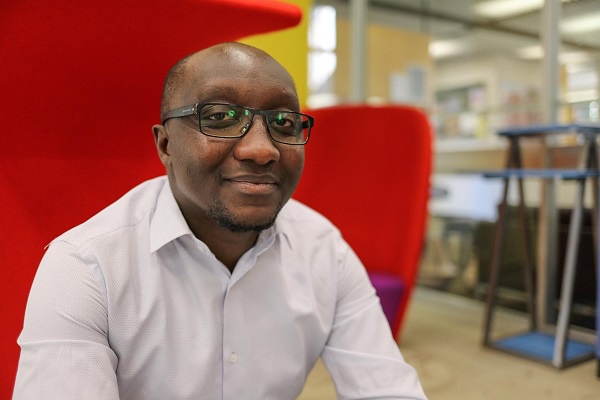
Prof. Tegawendé F. Bissyandé
Professor at the University of Luxembourg whose work sits at the intersection of software engineering and artificial intelligence. His research focuses on program analysis, software security, code reliability, and the evaluation and improvement of large AI models. With roots in West Africa and a global research profile, he has led international research initiatives linking theoretical advances with practical applications, while publishing widely in leading venues. He is also strongly committed to strengthening AI research capacity across Africa through institutional partnerships, mentorship of early-career researchers, and advocacy for inclusive AI innovation adapted to African contexts. Prof. Tegawendé F. Bissyandé is a member of the UN Independent International Scientific Panel on AI.

Dr. Jimena Sofia Viveros Alvarez
International lawyer and AI governance expert specializing in AI ethics, digital diplomacy, peace and security, and sustainable development. She is Managing Director and CEO of IQuilibriumAI and President of The HumAIne Foundation. She has served as a member of the UN Secretary-General’s High-Level Advisory Body on AI, co-leading work on peace and security, and is also affiliated with several global expert bodies on responsible AI, including in the military and security domains. Her background includes senior roles in the Mexican Government and experience with international organizations and tribunals.
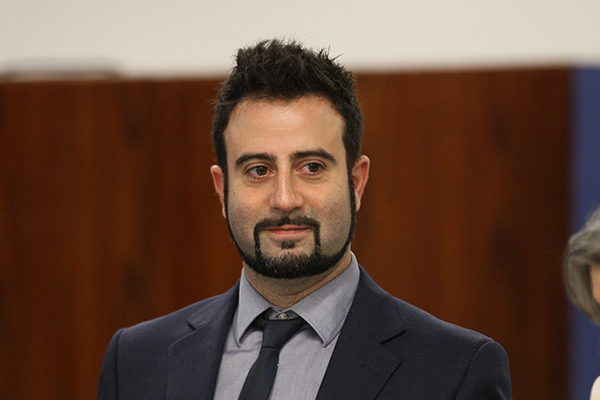
Dr. Fabro Steibel
Executive Director of the Institute for Technology & Society (ITS, itsrio.org), Professor of New Technologies and Innovation at ESPM Rio (Brazil), and Open Government Fellow at the Organization of American States. He holds a post-doc in online consultations from UFF (Brazil) and a PhD in Media from the University of Leeds (UK). He has more than ten years of experience in research projects related to technology and society, funded by organisations such as the European Commission, the European Parliament, Mercosur, and IDRC. His publications are mainly in the areas of human rights, open government, and technology.
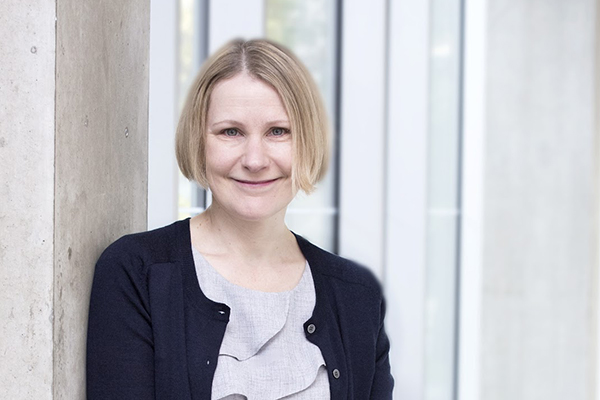
Prof. Anna Korhonen
Professor of Natural Language Processing at the University of Cambridge, Co-Director of the Language Technology Lab, Fellow of the Alan Turing Institute, Director of the Centre for Human Inspired Artificial Intelligence (CHIA), Fellow of ELLIS, Senior Research Fellow of Churchill College. Her research focuses on human-centric, multilingual and low-resource natural language processing, conversational AI, trustworthy and explainable NLP, and AI applications for social and global good. She holds a PhD in Computer Science from the University of Cambridge and master’s degrees in Computer Science and Linguistics. Prof. Korhonen is a member of the UN Independent International Scientific Panel on AI.

Prof. Dr. Román Orús
Ikerbasque Research Professor at the Donostia International Physics Center in San Sebastián and co-founder and Chief Scientific Officer of Multiverse Computing. A physicist by training, he earned his degree and PhD from the University of Barcelona, where he produced Spain’s first doctoral thesis on quantum algorithms. He has held research and academic positions at the University of Queensland, the Max Planck Institute of Quantum Optics, Johannes Gutenberg University Mainz, CNRS, and DIPC. His work spans quantum technologies, tensor networks, quantum artificial intelligence, complex quantum systems, and quantum-inspired approaches to AI, with more than 130 scientific publications and over 13,000 citations. He is also a member of the United Nations Independent International Scientific Panel on AI and has received major recognitions including the European Physical Society Early Career Prize and the 2024 Physics, Innovation and Technology Award of the Royal Spanish Society of Physics. Prof. Orus is a member of the UN Independent International Scientific Panel on AI.

Pedro Conceição
Director of the Human Development Report Office at the United Nations Development Programme (UNDP) and lead author of the Human Development Report, a role he has held since January 2019. He has held several senior positions at UNDP, including Director of Strategic Policy, Chief Economist and Head of the Strategic Advisory Unit for the Regional Bureau for Africa, and Director of the Office of Development Studies. His work focuses on human development, financing for development, inequality, global public goods, innovation, and technological change.
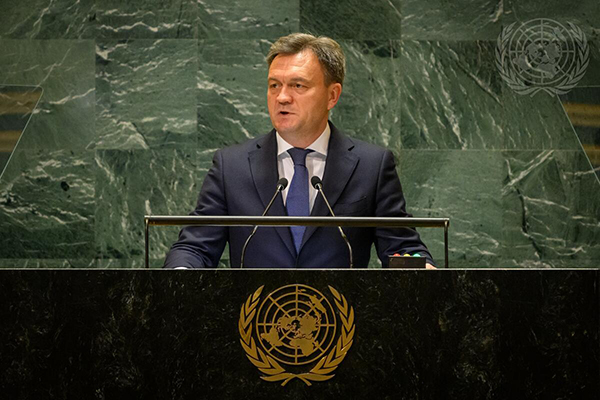
Dorin Recean
Moldovan economist, public official and former Prime Minister of the Republic of Moldova, serving from February 2023 to November 2025. He previously held senior roles as Minister of Internal Affairs and as Presidential Adviser on Defense and National Security / Secretary of the Supreme Security Council. His public service has focused on governance reform, national security, resilience, European integration, and Moldova’s response to regional instability. Before returning to government, he worked in academia, the private sector, and the ICT/data field. In December 2025, he was appointed Moldova’s Special Envoy for Development and Resilience.
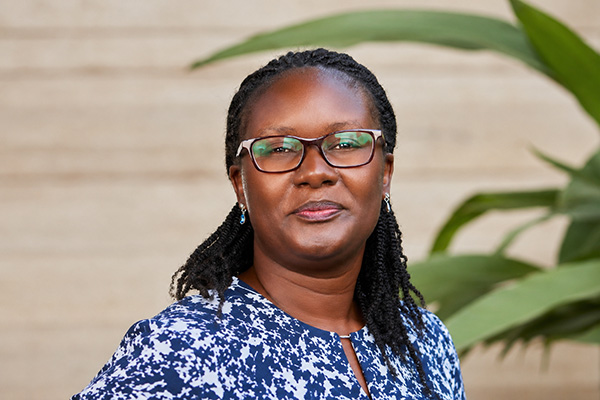
Dr. Joyce Nabende Nakatumba
Dr. Joyce Nakatumba-Nabende holds a PhD in Computer Science from Eindhoven University of Technology, The Netherlands, a Master of Science in Computer Science from Makerere University, Uganda and a Bachelor of Computer Science from Mbarara University of Science and Technology, Mbarara, Uganda. She is a senior lecturer in the Department of Computer Science, School of Computing and Informatics Technology, College of Computing and Information Sciences. She is the current head of the Makerere Artificial Lab under the department of Computer Science. Her major research interests are in the areas of Artificial Intelligence, Machine Learning, Natural Language processing and Business Process Management. She contributes to building the capacity of African data scientists and ensures diversity and gender equity in her research. Currently, she is a member of the Educational Advisory Committee of the Association for Computing Machinery, a board Member Data Science Africa, a member of the Responsible Artificial Intelligence (RAIN) Africa Network, a founding Member of the Open for Good Alliance Inclusive AI Commons with Localized Data by FAIR Forward and GIZ and a research scientist as part of the ARUA – The Guild Cluster of Research Excellence Addressing Global and African Challenges through Methods from Artificial Intelligence, Data Science and Theoretical and Computational Thinking.

Kecia Bertermann
Kecia Bertermann is an Associate Partner at Itad and leads the firm’s philanthropy support team, advising philanthropists and foundations on how to achieve lasting impact for people and planet. She supports foundations with strategy development, facilitates reflection, and embeds strategic learning processes to enable collective action in dynamic contexts. Before joining Itad, she was Director for Impact and Learning at Luminate, leading evidence and learning across a global portfolio, and previously served as Director of Digital Research and Learning at Girl Effect, with a focus on the digital divide, gender, and monitoring, evaluation and learning (MEL) for complex systems change.
For more information please contact:
Dumitru Vasilescu, Knowledge & Research Specialist, dumitru.vasilescu@unossc.org; or Mithre J. Sandrasagra, Communications Specialist, mithre.sandrasagra@unossc.org