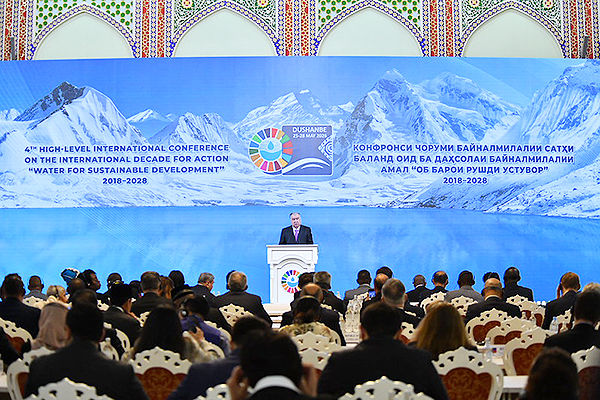
Dushanbe, Tajikistan
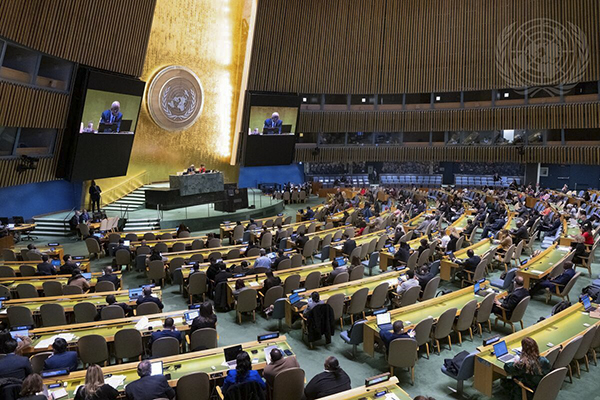
The Fourth High-Level International Conference on the Water Action Decade concluded with adoption of the Dushanbe Declaration, calling for stronger global partnerships, including through South-South and triangular cooperation, to accelerate sustainable and inclusive water action.
The Dushanbe Conference served as a key preparatory meeting for the 2026 UN Water Conference, taking place from 8 to 10 December and co-hosted by Senegal and the United Arab Emirates. Participants showcased scalable solutions, forged new partnerships, and took stock of progress on the Water Action Agenda – the collection of over 800 voluntary commitments made at the landmark 2023 UN Water Conference. In Dushanbe, for the first time, stakeholders began informal consultations on the 2028 UN Water Conference, which will mark the final review of the Water Action Decade and chart a course for the future. The Conference brought together Member States, UN entities, international financial institutions, civil society, Indigenous Peoples, youth, local governments, and the scientific community, reflecting the reality that solving the water crisis requires everyone at the table. Mr. Li Junhua, Under-Secretary-General for Economic and Social Affairs, co-chaired the Conference together with His Excellency Mr. Kohir Rasulzoda, Prime Minister of the Republic of Tajikistan.

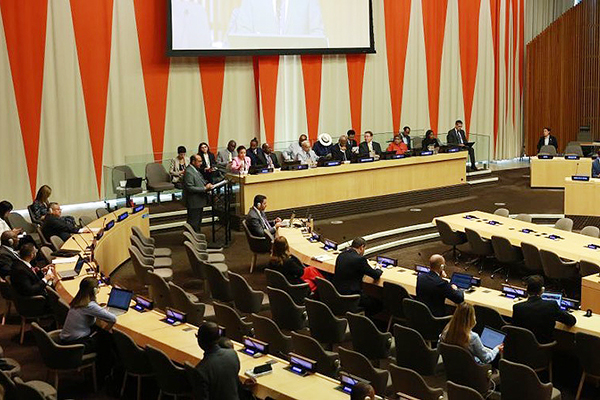
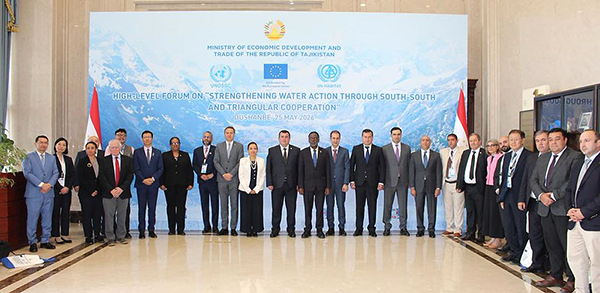
Held ahead of the Conference, a High-Level Forum on “Strengthening Water Action through South-South and Triangular Cooperation” brought together government representatives, development partners, UN entities, international financial institutions, local authorities, and other stakeholders to discuss priorities, partnerships and financing needed to accelerate global water action on the road from Dakar to Abu Dhabi. Hosted and co-organized by the Ministry of Economic Development and Trade of Tajikistan, together with the United Nations Office for South-South Cooperation and UN-HABITAT in Dushanbe, the Forum focused on advancing transformative partnerships across the rural-urban continuum and strengthening implementation through South-South and triangular cooperation.
Participants stressed that the world is facing increasingly interconnected water, climate, urbanization and development crises, which require urgent and coordinated action at global, national and local levels. Discussions highlighted that water security is no longer solely an environmental issue, but a major economic, social, governance and peacebuilding challenge directly linked to sustainable development, food security, health, energy and stability.
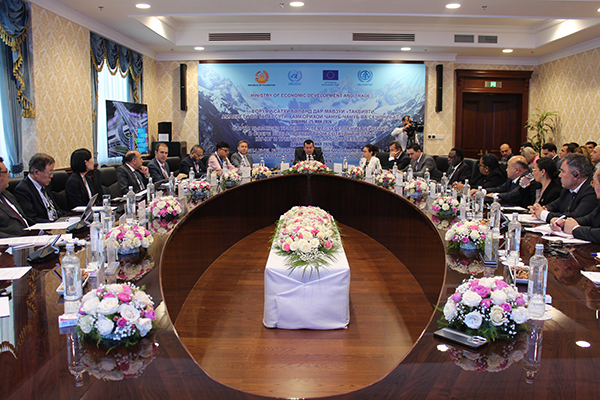
H.E. Abdurahmonzoda Abdurahmon Safarali, Minister of Economic Development and Trade of Tajikistan, underscored Tajikistan’s leadership in advancing the global water agenda through international initiatives championed by President Emomali Rahmon. The Minister highlighted Tajikistan’s readiness to share its experience in water diplomacy, sustainable water resource management and regional cooperation through South-South cooperation, while stressing the importance of collective action to address growing global water challenges.
Patrick Canagasingham of UNHABITAT emphasized the growing urban dimension of the global water crisis, noting rapid urbanization and climate pressures.
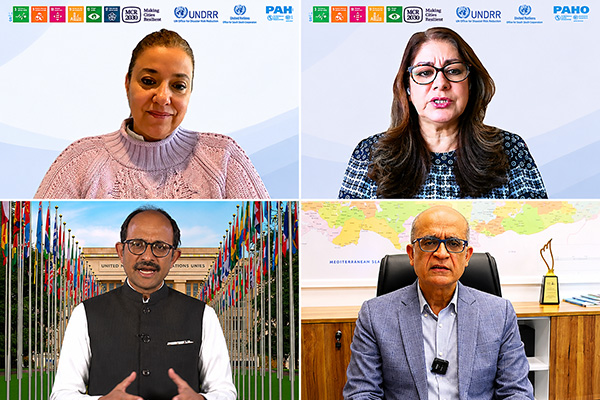
At the Forum, UNOSSC Director Dima Al-Khatib highlighted that 75% of humanity now lives in water-insecure countries, while 4 billion people face severe water scarcity each year. She stressed that South-South and triangular cooperation are vital to scaling practical solutions and resilience.
A key highlight of the Forum was the presentation of the findings of the 2026 UN “Global Water Bankruptcy Report” by Prof. Kaveh Madani of the United Nations University (UNU). The presentation introduced the concept of “water bankruptcy,” warning that many countries and cities are consuming and depleting water resources faster than they can be replenished. The report underscored that unsustainable water use, climate change, ecosystem degradation and rapidly expanding urban populations are pushing many regions toward critical levels of water stress. Participants agreed that the findings demonstrated the urgent need for a fundamental shift in how water is governed, financed and managed globally.

Throughout the discussions, governments emphasized that while progress has been made in expanding access to water and sanitation, major challenges remain. These include financing gaps, aging infrastructure, increasing climate-related disasters, droughts and floods, weak institutional coordination, and growing inequalities between rural and urban areas. Several speakers stressed that rapidly growing cities in developing countries are placing additional pressure on already fragile water systems and municipal services. Participants reiterated that countries of the Global South are not only facing acute water challenges, but are also generating practical, innovative and adaptable solutions that can inform global water action.
The Deputy Mayor of Dushanbe emphasized the importance of “water diplomacy” and “water prosperity,” noting that water should serve as a platform for cooperation, peace and shared prosperity rather than conflict. He highlighted the importance of strengthening links between local communities, municipalities and national governments to ensure that global commitments translate into practical local action. The Deputy Mayor also stressed the urgent need to strengthen and modernize municipal water infrastructure to improve service delivery, urban resilience and equitable access to water and sanitation for rapidly growing populations.
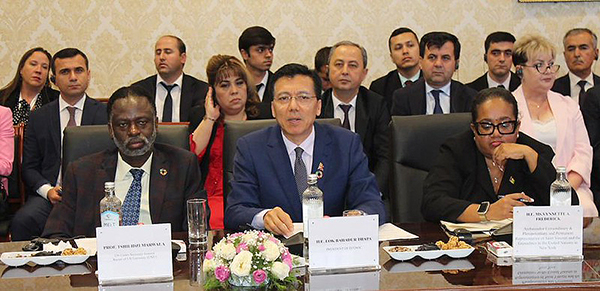
The President of the United Nations Economic and Social Council (ECOSOC), H.E. Mr. Lok Bahadur Thapa, underscored that South-South and triangular cooperation are indispensable for addressing the increasing complexity of global water challenges. He emphasized their critical role in mobilizing financing, strengthening solidarity among developing countries, facilitating the exchange of knowledge, technologies and experiences, and accelerating collective implementation efforts.
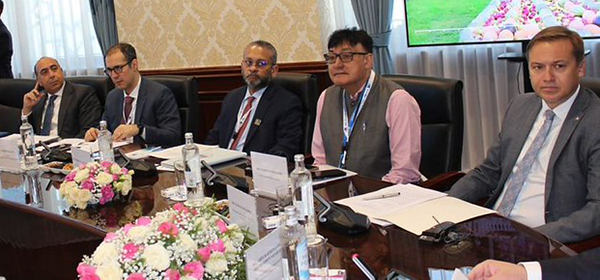
The Forum also benefited from substantive country perspectives from Egypt, Saint Vincent and the Grenadines, the Philippines and Uruguay, which enriched the discussion with experiences from different regional contexts. Their interventions highlighted shared priorities around water security, climate resilience, sustainable urbanization, financing and institutional cooperation, while underscoring the value of South-South and triangular cooperation as a platform for exchanging practical solutions, building partnerships and advancing collective action on the road to Abu Dhabi.
Many participants stressed that South-South and triangular cooperation provide practical pathways for scaling solutions and connecting countries facing similar challenges. Discussions highlighted the importance of peer learning, technical cooperation, institutional strengthening and regional collaboration, particularly among countries of the Global South.
Financing emerged as one of the central themes of the Forum. Participants emphasized that achieving sustainable water management will require significantly scaled-up investment and stronger collaboration among governments, development banks, the private sector and local authorities. South-South and triangular cooperation were highlighted as indispensable mechanisms for mobilizing finance, including blended finance models, public-private partnerships and innovative financing solutions. Stakeholders stressed the importance of leveraging partnerships with financial institutions and private sector actors to bridge financing gaps, support resilient water infrastructure and accelerate implementation at scale. Participants reiterated that countries of the Global South are not only facing acute water challenges, but are also generating practical, innovative and adaptable solutions that can inform global water action.
The Asian Development Bank (ADB) highlighted the importance of engaging the private sector more strategically to mobilize investment, innovation and technical expertise for sustainable water and urban development solutions. Discussions also emphasized the importance of integrated planning across the rural-urban continuum, stronger local governance, and investment. The World Bank highlighted its continued support to Tajikistan’s water agenda, particularly through investments and technical assistance aimed at strengthening water infrastructure, improving service delivery and enhancing climate resilience. Its intervention reinforced the importance of aligning development financing with national priorities and ensuring that water investments deliver practical benefits for communities.
Participants also emphasized the critical role of women in water governance, diplomacy and community-level action. The discussion recognized that women are often at the frontline of water management and household resilience, and that their leadership, knowledge and participation must be more systematically reflected in decision-making, capacity-building and partnership frameworks. in climate-resilient infrastructure.
Stakeholders further highlighted the need to strengthen science-policy linkages, improve data and evidence-based decision-making, support gender-responsive and inclusive approaches, and ensure that vulnerable populations are not left behind. Several interventions underscored the importance of local-level action, community engagement and city-to-city cooperation as essential components of sustainable water governance.
Key recommendations emerging from the Forum included:
- Strengthening South-South and triangular cooperation platforms for practical knowledge-sharing and scaling innovative solutions;
- Expanding partnerships among governments, municipalities, development banks, the private sector, academia and UN entities;
- Mobilizing greater financing for resilient municipal and national water infrastructure;
- Promoting blended finance and public-private partnership models;
- Enhancing integrated rural-urban water planning and governance;
- Supporting locally driven and community-based solutions;
- Strengthening science, innovation and data systems for evidence-based policymaking;
- Advancing inclusive and equitable access to water and sanitation services;
- Accelerating implementation-oriented cooperation and partnerships in preparation for Abu Dhabi.
The Forum concluded with a strong call for transformative, multilevel and action-oriented partnerships that can bridge financing, governance and implementation gaps while strengthening solidarity and cooperation among countries and stakeholders. Participants agreed that achieving sustainable water security will require moving beyond fragmented approaches toward integrated solutions that connect local realities with global commitments and place cooperation at the center of the global water agenda.
Read SOUTH-SOUTH TRUST FUNDS: Actions on Vital Water Issues here.