Date – 22 May 2018
Venue – United Nations Conference Room 7
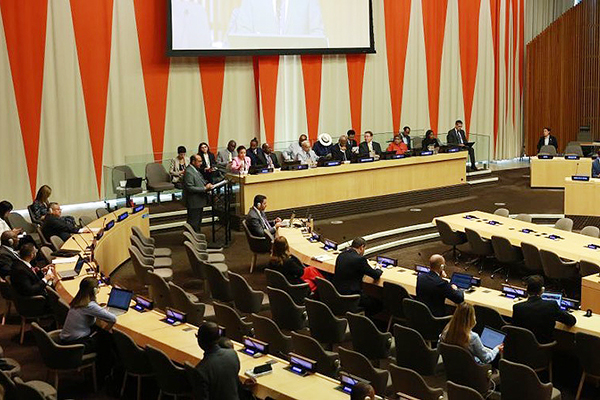
 This event, organized by United Nations Office for South-South Cooperation in collaboration with the Permanent Missions of Tajikistan, Morocco, Argentina and Maldives, UNESCO, UN-Water and IFAD, contributes to the objectives of the Development Cooperation Forum promoting knowledge sharing and mutual learning for the achievement of the 2030 Agenda and the SDGs. It highlights the importance of cooperation among developing countries in collaboration with the UN entities to attain the Goal 6, in relation to water management and food security.
Participants highlighted the importance, benefits and challenges of water cooperation; enhancing knowledge and building capacity for water cooperation; and encouraging partnerships and dialogue around water cooperation.
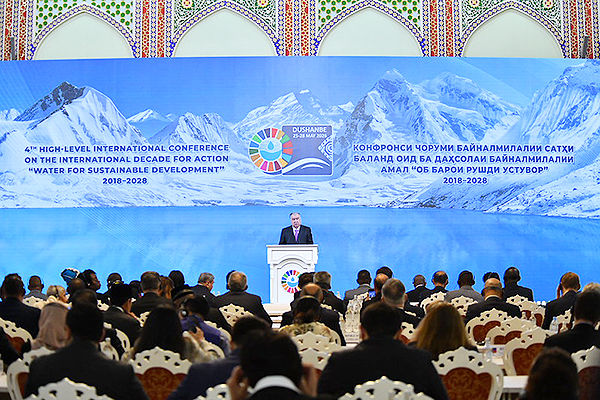
Water is at the heart of recent milestone global agreements such as the 2030 Agenda for Sustainable Development, the 2015-2030 Sendai Framework for Disaster Risk Reduction, and the 2015 Paris Agreement. The UN General Assembly adopted a resolution 71/222 to proclaim the period from 2018 to 2028 the International Decade for Action, “Water for Sustainable Development”. The resolution expresses that it is deeply concerned that water-related disasters, water scarcity and water pollution will be further exacerbated by urbanization, population growth, desertification, drought and other extreme weather events and climate change, as well as by the lack of capacity to ensure integrated water resource management. It further concerned that many water-related ecosystems are threatened by poor management and unsustainable development and face increased uncertainty and risks owing to climate change and other factors.
According to various institutions and experts, over 660 million people in the world still do not have access to safe drinking water, 1.8 billion people drink water from sources contaminated by feces, and 2.4 billion people do not have access to improved sanitation. It is expected that, by 2050, the number of people living in the regions with increased water stress will reach 2.3 billion. Northern Africa and Western Asia experience water stress levels above 60 per cent, which indicates the strong probability of future water scarcity .
This event, organized by United Nations Office for South-South Cooperation in collaboration with the Permanent Missions of Tajikistan, Morocco, Argentina and Maldives, UNESCO, UN-Water and IFAD, contributes to the objectives of the Development Cooperation Forum promoting knowledge sharing and mutual learning for the achievement of the 2030 Agenda and the SDGs. It highlights the importance of cooperation among developing countries in collaboration with the UN entities to attain the Goal 6, in relation to water management and food security.
Participants highlighted the importance, benefits and challenges of water cooperation; enhancing knowledge and building capacity for water cooperation; and encouraging partnerships and dialogue around water cooperation.
Water is at the heart of recent milestone global agreements such as the 2030 Agenda for Sustainable Development, the 2015-2030 Sendai Framework for Disaster Risk Reduction, and the 2015 Paris Agreement. The UN General Assembly adopted a resolution 71/222 to proclaim the period from 2018 to 2028 the International Decade for Action, “Water for Sustainable Development”. The resolution expresses that it is deeply concerned that water-related disasters, water scarcity and water pollution will be further exacerbated by urbanization, population growth, desertification, drought and other extreme weather events and climate change, as well as by the lack of capacity to ensure integrated water resource management. It further concerned that many water-related ecosystems are threatened by poor management and unsustainable development and face increased uncertainty and risks owing to climate change and other factors.
According to various institutions and experts, over 660 million people in the world still do not have access to safe drinking water, 1.8 billion people drink water from sources contaminated by feces, and 2.4 billion people do not have access to improved sanitation. It is expected that, by 2050, the number of people living in the regions with increased water stress will reach 2.3 billion. Northern Africa and Western Asia experience water stress levels above 60 per cent, which indicates the strong probability of future water scarcity .
 Ending food insecurity for all will require continued and focused efforts, especially in Asia and Africa. More investments in agriculture are needed to increase capacity for agricultural productivity.
In addition, the impacts of climate change pose profound effects to global development. For example, the Central Asian glaciers, which are the main source of water for the rivers in the region, have been diminishing on average by 0.6 to 0.8 per cent per year in terms of glacial area, and by 0.1 per cent per year in terms of ice volume. The current situation demands that urgent measures be undertaken to adapt to the dramatic effects of climate change and to promote the sustainable management of water resources in the region.
These problems can be tackled only through the coordinated actions of all countries involved in constructive regional cooperation, with due consideration to their respective interests, the improvement of the institutional and legal framework, and a significant increase in investment in infrastructure.
Ending food insecurity for all will require continued and focused efforts, especially in Asia and Africa. More investments in agriculture are needed to increase capacity for agricultural productivity.
In addition, the impacts of climate change pose profound effects to global development. For example, the Central Asian glaciers, which are the main source of water for the rivers in the region, have been diminishing on average by 0.6 to 0.8 per cent per year in terms of glacial area, and by 0.1 per cent per year in terms of ice volume. The current situation demands that urgent measures be undertaken to adapt to the dramatic effects of climate change and to promote the sustainable management of water resources in the region.
These problems can be tackled only through the coordinated actions of all countries involved in constructive regional cooperation, with due consideration to their respective interests, the improvement of the institutional and legal framework, and a significant increase in investment in infrastructure.
 South-South cooperation (SSC) has become an important element of the global cooperation architecture for sustainable development. SSC helps to increase countries’ adaptive capacity, by applying transferred knowledge and technology that are more accessible, adaptable and affordable to developing countries. It further contributes to increasing countries’ capacities, by building capacities and enhancing abilities to respond successfully to climate change, water scarcity and food insecurity.
Many countries of the South have put in place sound policies to manage their water resources as a key element to achieve their economic and social objectives. A better management of water resources is key to mitigate the effects of climate and to attain food security, among other SDGs. These policies and best practices can be shared with other countries of the South and beyond.
South-South cooperation (SSC) has become an important element of the global cooperation architecture for sustainable development. SSC helps to increase countries’ adaptive capacity, by applying transferred knowledge and technology that are more accessible, adaptable and affordable to developing countries. It further contributes to increasing countries’ capacities, by building capacities and enhancing abilities to respond successfully to climate change, water scarcity and food insecurity.
Many countries of the South have put in place sound policies to manage their water resources as a key element to achieve their economic and social objectives. A better management of water resources is key to mitigate the effects of climate and to attain food security, among other SDGs. These policies and best practices can be shared with other countries of the South and beyond.
This event, organized by United Nations Office for South-South Cooperation in collaboration with the Permanent Missions of Tajikistan, Morocco, Argentina and Maldives, UNESCO, UN-Water and IFAD, contributes to the objectives of the Development Cooperation Forum promoting knowledge sharing and mutual learning for the achievement of the 2030 Agenda and the SDGs. It highlights the importance of cooperation among developing countries in collaboration with the UN entities to attain the Goal 6, in relation to water management and food security.
Participants highlighted the importance, benefits and challenges of water cooperation; enhancing knowledge and building capacity for water cooperation; and encouraging partnerships and dialogue around water cooperation.
Water is at the heart of recent milestone global agreements such as the 2030 Agenda for Sustainable Development, the 2015-2030 Sendai Framework for Disaster Risk Reduction, and the 2015 Paris Agreement. The UN General Assembly adopted a resolution 71/222 to proclaim the period from 2018 to 2028 the International Decade for Action, “Water for Sustainable Development”. The resolution expresses that it is deeply concerned that water-related disasters, water scarcity and water pollution will be further exacerbated by urbanization, population growth, desertification, drought and other extreme weather events and climate change, as well as by the lack of capacity to ensure integrated water resource management. It further concerned that many water-related ecosystems are threatened by poor management and unsustainable development and face increased uncertainty and risks owing to climate change and other factors.
According to various institutions and experts, over 660 million people in the world still do not have access to safe drinking water, 1.8 billion people drink water from sources contaminated by feces, and 2.4 billion people do not have access to improved sanitation. It is expected that, by 2050, the number of people living in the regions with increased water stress will reach 2.3 billion. Northern Africa and Western Asia experience water stress levels above 60 per cent, which indicates the strong probability of future water scarcity .
Ending food insecurity for all will require continued and focused efforts, especially in Asia and Africa. More investments in agriculture are needed to increase capacity for agricultural productivity.
In addition, the impacts of climate change pose profound effects to global development. For example, the Central Asian glaciers, which are the main source of water for the rivers in the region, have been diminishing on average by 0.6 to 0.8 per cent per year in terms of glacial area, and by 0.1 per cent per year in terms of ice volume. The current situation demands that urgent measures be undertaken to adapt to the dramatic effects of climate change and to promote the sustainable management of water resources in the region.
These problems can be tackled only through the coordinated actions of all countries involved in constructive regional cooperation, with due consideration to their respective interests, the improvement of the institutional and legal framework, and a significant increase in investment in infrastructure.
South-South cooperation (SSC) has become an important element of the global cooperation architecture for sustainable development. SSC helps to increase countries’ adaptive capacity, by applying transferred knowledge and technology that are more accessible, adaptable and affordable to developing countries. It further contributes to increasing countries’ capacities, by building capacities and enhancing abilities to respond successfully to climate change, water scarcity and food insecurity.
Many countries of the South have put in place sound policies to manage their water resources as a key element to achieve their economic and social objectives. A better management of water resources is key to mitigate the effects of climate and to attain food security, among other SDGs. These policies and best practices can be shared with other countries of the South and beyond.