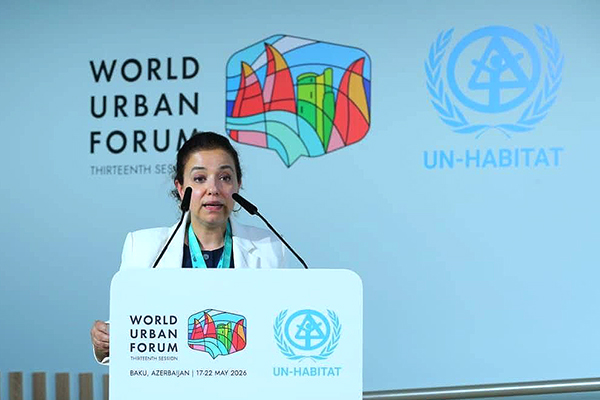
At the Thirteenth Session of the World Urban Forum 13, civil society organizations from across the Global South gathered for the first-ever “WUF13 NGO Forum”, marking a new milestone in efforts to strengthen inclusive participation in global urban development discussions and decision-making.
Organized on 19 May 2026 by the NGO Agency of Azerbaijan in partnership with the Global South NGO Platform (GSNP), the Forum brought together approximately 800 representatives of local and international NGOs.
The event represented the first time in the history of the World Urban Forum that a dedicated NGO Forum was convened as part of the official programme, highlighting growing recognition of civil society as an important partner in advancing sustainable, resilient and inclusive urban development.
Opening the Forum, Anaclaudia Rossbach, Executive Director of UN-Habitat, described the gathering as a “historic event” for WUF and underscored the importance of civil society engagement in shaping more inclusive and sustainable urban futures.
Hikmet Hajiyev, Assistant to the President of Azerbaijan and Head of the Foreign Policy Department of the Presidential Administration, emphasized Azerbaijan’s efforts to strengthen dialogue and cooperation between the Global North and the Global South through diplomacy, partnership-building and knowledge exchange. He also highlighted Azerbaijan’s ongoing reconstruction and urban redevelopment efforts in Karabakh and East Zangezur as examples of experiences that could be shared through international cooperation and peer learning.
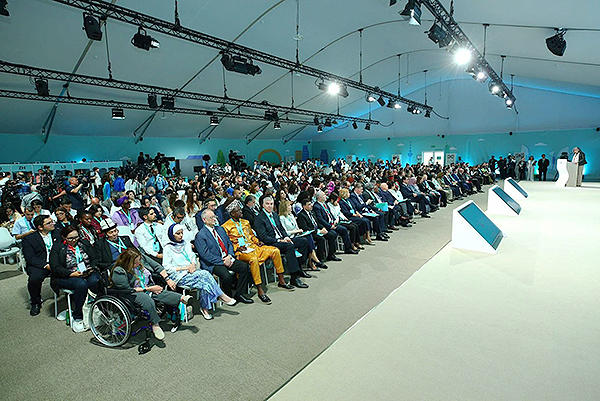
Former Executive Director of UN-Habitat Maimunah Mohd Sharif emphasized the importance of ensuring that local communities and civil society organizations play a central role in shaping the future of cities, highlighting the value of locally driven solutions and community participation.
Speaking at the Forum, Dima Al-Khatib, Director of the United Nations Office for South-South Cooperation (UNOSSC), emphasized that NGOs and civil society organizations could play an active role in shaping more inclusive and responsive cooperation approaches by contributing local experiences, innovative solutions and community-level perspectives.
“Sustainable cities are not built through infrastructure alone,” she stated. “They are built through inclusion, participation, trust and local ownership.”
Director Al-Khatib stressed that cities now sit at the center of the global sustainable development agenda.
“Many of the Sustainable Development Goals will ultimately be won or lost in urban areas,” she noted.
Director Al-Khatib highlighted that more than half of the world’s population already lives in cities, with nearly 70 per cent projected to reside in urban areas by 2050. Across the Global South – where most future urban growth is expected to occur – cities are increasingly confronting pressures linked to climate change, water insecurity, migration, inequality, housing shortages and infrastructure gaps. “At the same time, cities are also spaces for innovation, resilience and transformation,” she said.
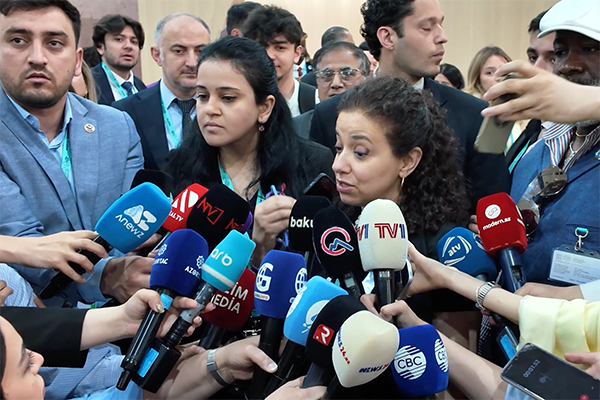
Director Al-Khatib also highlighted the role of South-South and triangular cooperation in enabling cities, institutions and communities across the Global South to exchange practical knowledge, scalable innovations and policy solutions grounded in shared development realities. “Across the Global South, cities are already learning from one another on affordable housing, sustainable transport systems, waste management, renewable energy, digital public services, climate adaptation and community-based urban resilience,” she noted.
She highlighted several UNOSSC-supported initiatives advancing urban cooperation and resilience, including South-South Cities Clusters and partnerships with China, UNESCO, UN-Habitat, UNDRR, PAHO/WHO and the UN Technology Bank. These initiatives support city-to-city exchanges, disaster risk reduction training, sustainable tourism, heritage preservation and climate resilience efforts involving local authorities and practitioners across more than 168 countries and territories.
Looking ahead, she introduced the forthcoming Global Alliance for South-South and Triangular Cooperation, a new initiative under the UNOSSC Strategic Framework 2026-2029 aimed at strengthening partnerships, matchmaking, knowledge exchange and scaling-up of development solutions across the Global South and beyond. “The Alliance is envisioned as an inclusive ecosystem bringing together governments, UN entities, NGOs and civil society organizations, development banks, academia and private sector actors,” she said.
Additional speakers highlighted the importance of solidarity, multilateral cooperation and broad-based partnerships involving governments, civil society, academia, local communities and the private sector in addressing increasingly complex urban challenges. The Forum also featured a panel discussion on “Sustainable and Inclusive Urban Development,” bringing together representatives from civil society organizations and development networks across multiple regions to exchange experiences and practical approaches to strengthening community resilience, urban inclusion and participatory governance.
The Forum reflected growing momentum to strengthen civil society engagement within global development processes while highlighting the increasing importance of South-South and triangular cooperation in advancing inclusive, locally driven urban solutions across the Global South.
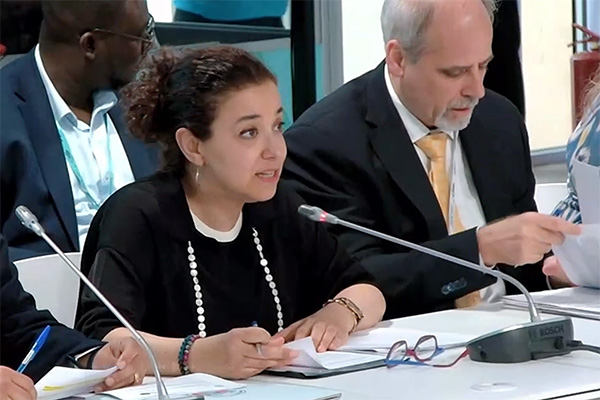
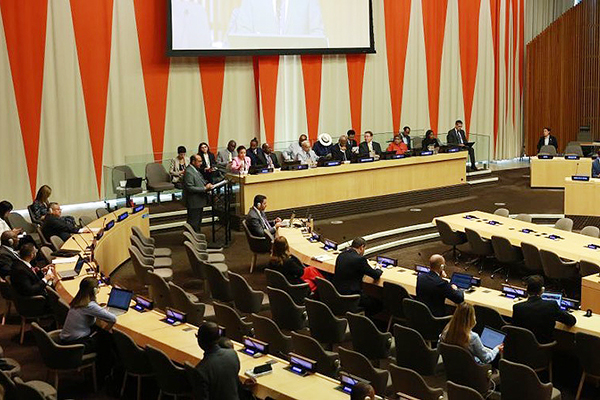
Side event co-organized by UNOSSC and UN-Habitat: Innovative Partnerships and Solutions for the Rapidly Urbanizing Global South
Countries of the Global South are increasingly looking to translate urban policy dialogue into practical cooperation that delivers housing, services and resilient cities at scale, speakers emphasized at a World Urban Forum 13 side event co-organized by UNOSSC and UN-Habitat.
Meeting under the theme “Innovative Partnerships and Solutions for the Rapidly Urbanizing Global South,” government leaders, UN officials and development partners called for South-South and triangular cooperation to become a stronger engine for urban transformation.
The message was clear: cities need solutions that work now.
UNOSSC Director Dima Al-Khatib said the global housing crisis “goes far beyond bricks and mortar,” noting that nearly 3 billion people live in inadequate housing, 1.1 billion in slums or informal settlements, and more than 300 million have no home at all.
The Director stressed that rapid urbanization, climate shocks, conflict and inequality are placing growing pressure on cities, especially across Africa and Asia, where most future urban population growth will take place. “People and governments need solutions that have worked in similar settings, developed by those who understand these realities firsthand,” she said.

Moderating the session, Patrick Canagasingham, Director of UN-Habitat’s Regional Programme Division, noted that the Global South is experiencing the fastest urban transition in human history. Without adequate planning, financing, governance and infrastructure, he warned, urban growth risks deepening inequality rather than expanding opportunity.
Speakers highlighted practical models already emerging from the Global South.
Ghana’s Minister for Works, Housing and Water Resources, H.E. Kenneth Gilbert Adjei, presented Ghana’s sustainable cities strategy, focused on integrated planning, empowered local governments, climate-resilient housing, slum upgrading, secure tenure and stronger municipal finance. He said success would not be measured by strategies produced, but by “safer neighborhoods, affordable housing, resilient infrastructure, better managed lands, more capable local governments, and cities that work for women, young people and vulnerable communities.”
Colombia’s Ambassador to Azerbaijan, H.E. Nelsy Raquel Munar Jaramillo, emphasized that cities and territories must be treated not only as recipients of national policy, but as drivers of development. She pointed to Colombia’s “Biodiverse Habitat” Nuestro Hábitat Biodiverso approach, which places water, ecosystems and communities at the centre of urban development. She also underlined Colombia’s commitment to subnational diplomacy and decentralized cooperation, noting that “Colombia learns from Colombia” through exchanges among its own territories, while also sharing experience internationally.
Azerbaijan showcased its ASAN public service model as a Southern-led innovation with wide relevance. Mahammadali Khudaverdiyev, Director for International Affairs at the State Agency for Public Service and Social Innovations, said ASAN brings more than 30 public institutions together under one roof, delivering more than 400 public and private services. With citizen-satisfaction above 99 percent, mobile units serving remote communities, and digital delivery expanding access, ASAN demonstrates how institutional trust can be built through accountable, people-centred governance, he said.
From the UN system, speakers connected urban resilience to gender equality, climate action, data, finance and local capacity.
In a video message, Sarah Hendriks of UN Women stressed that safe cities must be built with women and girls, not merely for them. She highlighted UN Women’s Safe Cities and Safe Public Spaces initiative, active across 75 cities in 36 countries, supporting safer transport, lighting, sanitation, markets and public spaces.
Simon Springett, UN Resident Coordinator for Barbados and the Eastern Caribbean, said small island developing States are already turning climate vulnerability into shared expertise. He cited Dominica, where Hurricane Maria caused losses equivalent to 253 percent of GDP and damaged 90 percent of housing stock, as an example of crisis lessons becoming regional preparedness.
Stefan Priesner, UN Resident Coordinator in India, described India as a “fountain of good practices” in urban development, citing large-scale affordable housing, digital public infrastructure, climate resilience and community-led solutions. He said city-to-city partnerships and support for bankable projects would be increasingly important.
Sabine Machl, UN Resident Coordinator in Uzbekistan, said South-South cooperation has supported training for officials from 35 Uzbek cities and helped strengthen peer learning with countries including China, Ghana, Sierra Leone and The Gambia. She also highlighted regional cooperation funds that are moving beyond exchange to co-investment.
Closing the session, Director Al-Khatib said UNOSSC and UN-Habitat would work together to carry forward the ideas emerging from Baku. She invited partners to engage with UNOSSC’s forthcoming Global Alliance for South-South and Triangular Cooperation as a platform to connect countries, cities, institutions and solutions.
The event reinforced a central message of WUF13: the future of sustainable urbanization will depend not only on finance and infrastructure, but on trust, inclusion, local ownership and practical cooperation among countries facing similar challenges.